
Sacciolepis striata
Sacciolepis striata
Description
Growing requirements
Sacciolepis striata, commonly known as American cupscale, is a perennial grass species belonging to the Poaceae family. It is primarily native to wetlands, marshes, and the margins of freshwater bodies in warm climates.
The plant grows via creeping rhizomes, forming dense stands that are vital for soil stabilization in aquatic environments. Its stems are often succulent and can adapt to varying water depths, making it a robust species for hydrological stability.
Ideal conditions for this species include high solar radiation and consistently wet, nutrient-rich soils. It thrives in humid conditions and is highly intolerant of drought, which makes site selection critical for cultivation.
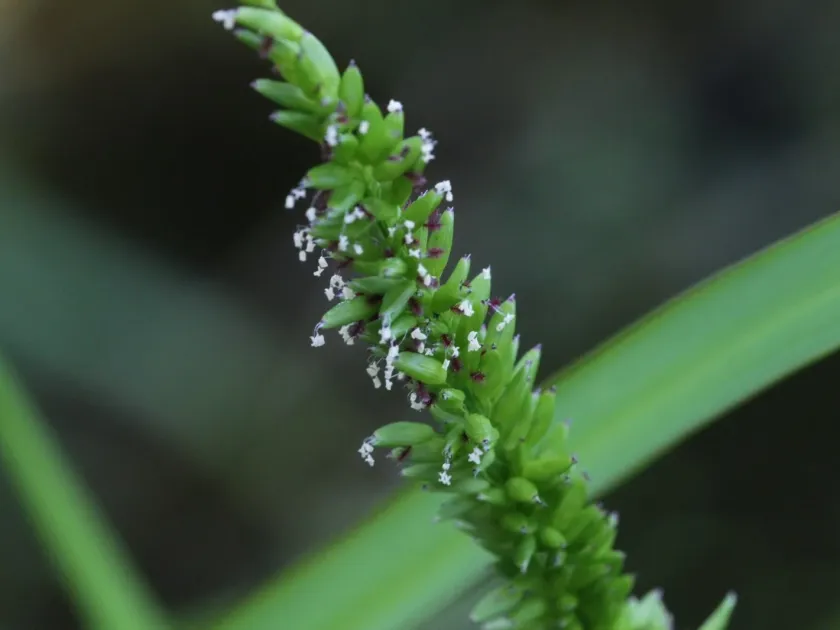
Botanically, it is identified by its narrow, cylindrical panicles that have a striped appearance. These structures house the seeds, which are dispersed efficiently in wet environments, ensuring the persistence of the population.
In agricultural practice, it is valued for its contribution to natural forage production in riparian areas and its ability to act as a bio-filter, improving water quality by absorbing excess nutrients from the soil.
Main diseases and pests
The most significant threat to Sacciolepis striata is habitat alteration, specifically the permanent drainage of wetlands. Without constant moisture, the plant cannot maintain its metabolic processes or structural integrity.
The species may be susceptible to various fungal pathogens when airflow is restricted in dense monocultures. These infections typically manifest as leaf spot or blight, reducing the overall biomass yield.
Pests that target native grasses, including specialized grasshoppers and sap-sucking insects, can impact productivity during the peak growing season, necessitating careful field monitoring.
Invasive weed encroachment represents a competitive threat. Vigorous non-native species can outcompete the grass for light and nutrients, leading to a decline in the density of Sacciolepis striata stands.
Overgrazing by livestock is another major factor. Continuous removal of the canopy prevents the plant from replenishing its rhizome energy reserves, eventually weakening the stand's ability to regrow the following year.