
Sacciolepis interrupta
Sacciolepis interrupta
Description
Growing requirements
Sacciolepis interrupta is a perennial grass species belonging to the Poaceae family, specifically adapted to life in aquatic and semi-aquatic environments. It is native to tropical regions where it thrives in wetlands, swamps, and along water bodies.
The plant possesses a robust root system capable of anchoring in water-saturated soils. Its growth habit is characterized by upright, succulent stems that can withstand periodic flooding, making it an excellent candidate for wetland stabilization projects.
Regarding climatic requirements, this grass demands warm temperatures and constant moisture. It is a heliophilous species that requires full sunlight exposure to maintain high rates of biomass accumulation throughout its active growing season.
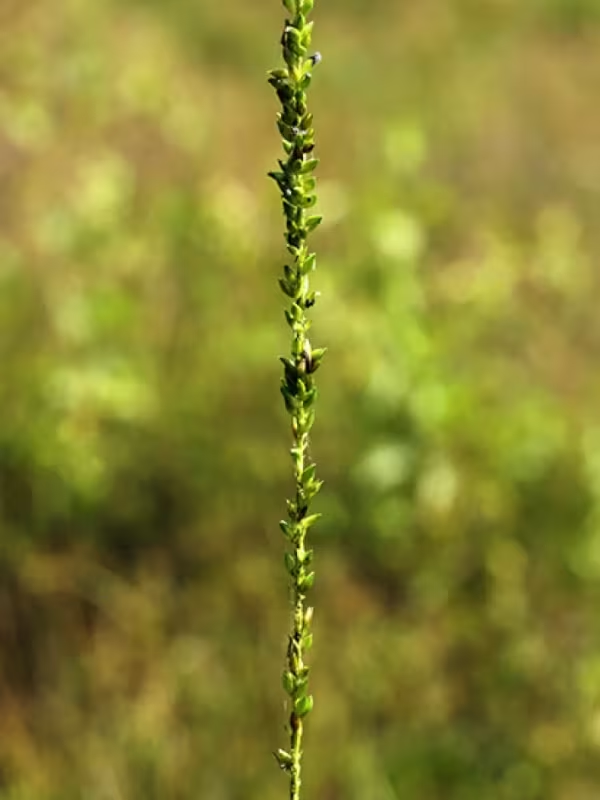
Botanically, it is identified by its dense, interrupted panicle inflorescences that rise above the foliage. The leaves are linear and glabrous, typical of the genus, designed to channel water efficiently towards the base of the plant.
Economically, Sacciolepis interrupta is valued for its potential in soil conservation and as a forage source in regions where traditional dry-land grasses fail to grow. It effectively prevents erosion along banks and contributes to the biodiversity of reclaimed marshlands.
Main diseases and pests
The main pathological threats to Sacciolepis interrupta include fungal rusts that thrive in environments with low air circulation and high relative humidity. These infections can drastically reduce the forage quality of the plant.
Pest pressure is primarily driven by aphids and leafhoppers that colonize the succulent stalks. Infestations are often localized but can spread rapidly if the planting density is too high, leading to stunted growth.
Agronomic management must account for the plant's sensitivity to broad-spectrum herbicides. Weed management should rely on manual removal or precise timing to avoid harming the Sacciolepis crop itself.
Water quality monitoring is essential, as the species is sensitive to heavy metal accumulation and nutrient imbalances. High nitrogen levels can sometimes trigger an overgrowth that reduces the plant's structural integrity.
To ensure crop health, maintain optimal spacing between individual plants to encourage better airflow. Regular monitoring of the foliage for signs of chlorosis or spotting helps in the early detection and management of physiological and biological stressors.