
Sacciolepis africana
Sacciolepis africana
Description
Growing requirements
Sacciolepis africana is a perennial grass species belonging to the Poaceae family, specifically adapted to humid and wetland environments. As a hygrophyte, it thrives in regions characterized by seasonal flooding and high soil moisture levels, making it a critical component of tropical ecosystems.
The native range of this species extends across sub-Saharan Africa, where it predominantly occupies river banks, lake margins, and marshy meadows. It is highly valued in these regions for its ability to persist in waterlogged soil where most conventional forage crops would fail to survive.
In terms of growth requirements, Sacciolepis africana demands consistent moisture and thrives in heavy, nutrient-rich soils such as silts and clays. It performs optimally under high temperature regimes, utilizing the intense tropical sunlight to fuel its rapid vegetative growth during the rainy season.
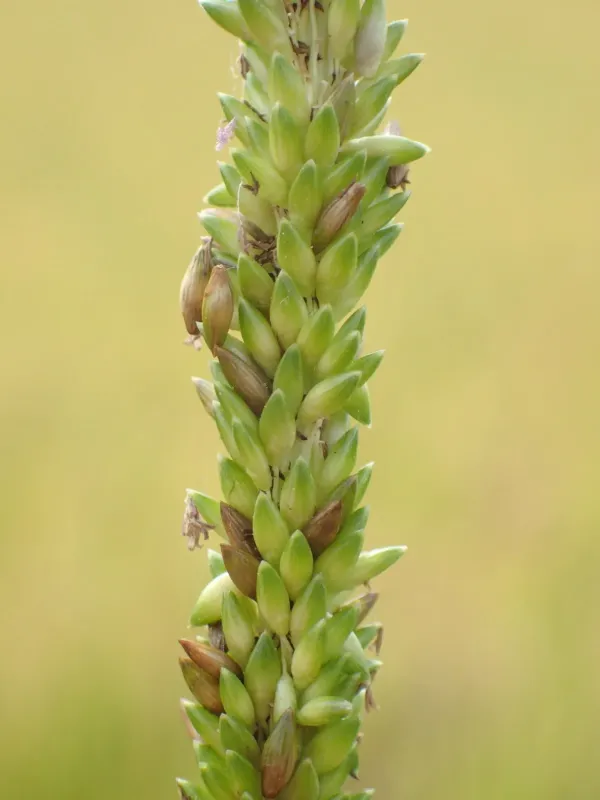
The plant exhibits distinct botanical features, including decumbent or upright stems that frequently root at the nodes when in contact with moist ground. Its leaves are narrow and linear, complemented by compact, cylindrical panicles that are typical for the genus Sacciolepis.
From an agricultural standpoint, it serves as an essential forage resource in flood-prone pastures. Its ability to withstand prolonged inundation ensures a steady supply of green fodder, providing vital nutrition to livestock in environments where land management options are restricted by water levels.