
Rodgersia hybrids
Rodgersia hybrids
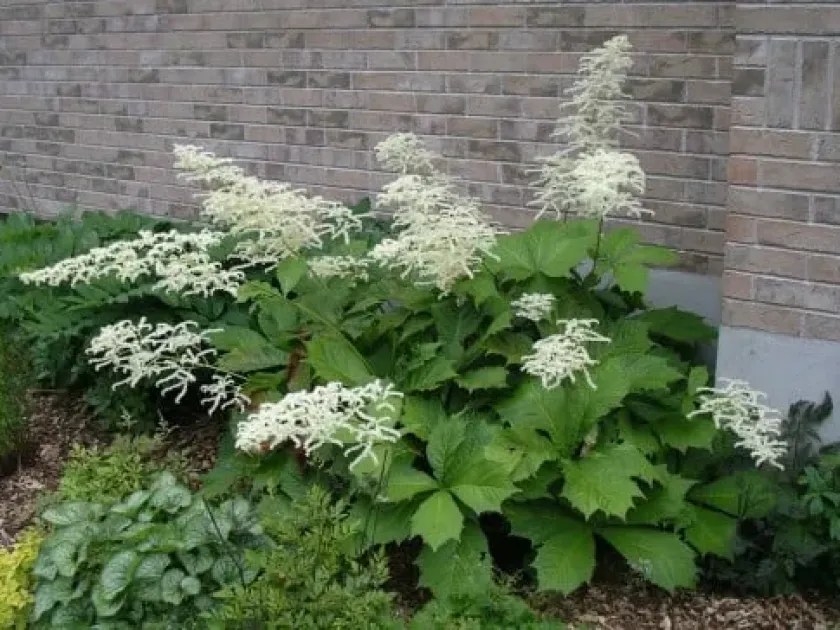
Description
Growing requirements
Rodgersia hybrids are ornamental perennial plants belonging to the Saxifragaceae family. They are highly prized in horticulture for their dramatic, large, compound leaves and tall, showy panicles of small flowers that bloom in early to mid-summer.
Native to the moist woodland regions of East Asia, these plants thrive in areas with temperate climates. Their natural habitat dictates their requirements for cool, humid air and protection from the intense heat of midday sun exposure.
To ensure optimal growth, Rodgersia requires rich, moisture-retentive, and well-draining soil. Providing a consistent supply of organic matter and maintaining high soil humidity is crucial for the health and vigor of the foliage throughout the growing season.
The ideal location for this crop is a site in partial to full shade where the plants are protected from drying winds. These conditions help prevent scorching of the broad, sensitive leaves, which can lose water rapidly under direct sunlight.
Cultural practices include regular mulching with compost or leaf mold to preserve soil moisture and suppress weeds. While the plants are generally robust, they appreciate light supplemental watering during extended dry periods to maintain their architectural structure.
Main diseases and pests
The primary pests affecting Rodgersia hybrids are slugs and snails, which can cause significant aesthetic damage to the large leaves. Integrated pest management, such as physical barriers or approved bait, is recommended when infestations are detected.
Disease issues are typically minimal unless the plant is grown in poorly drained soil, which can lead to crown or root rot. Ensuring that the planting site has an effective drainage system is the best preventative measure against soil-borne pathogens.