
Richardia stellaris
Richardia stellaris
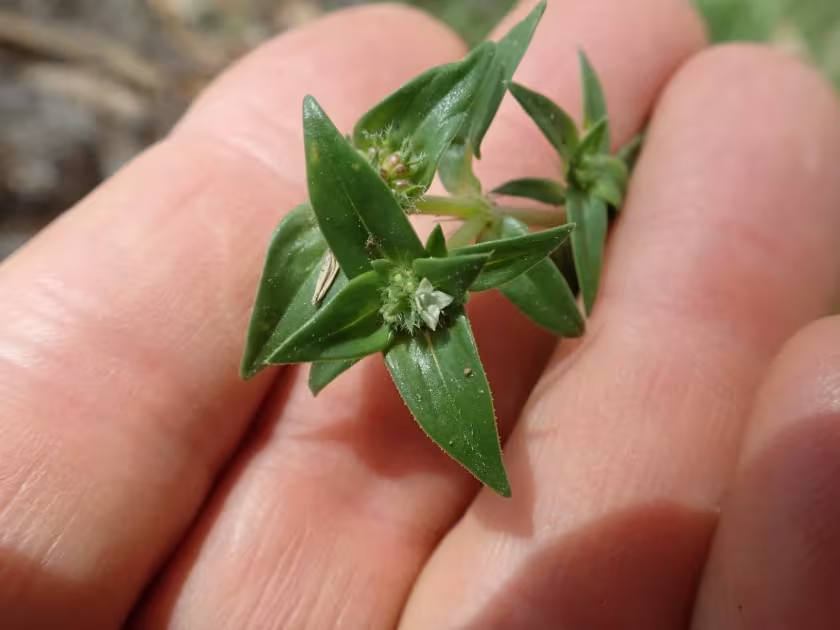
Description
Growing requirements
Richardia stellaris is a herbaceous plant belonging to the Rubiaceae family. While it possesses certain botanical interest, in the agricultural sector, it is primarily identified as an invasive weed capable of infesting various row crops and pastures.
Originating from the tropical and subtropical regions of the Americas, this species has successfully migrated to numerous countries across the globe. Its ability to adapt to diverse environments allows it to thrive in both moist, fertile soils and more challenging, disturbed landscapes.
Botanically, Richardia stellaris features a low-growing, often prostrate habit with hirsute foliage. The small, star-shaped inflorescences are a defining characteristic that aids in identification. The plant has a relatively shallow but fibrous root system that extracts water efficiently.
The plant requires ample sunlight for vigorous growth and is highly sensitive to total shade. It typically colonizes field edges, newly cultivated soils, and areas with low crop competition, making it a persistent concern for farmers in the early stages of the growing season.
Successful management relies on understanding its growth cycle. Since it propagates via seeds, agricultural strategies focus on soil preparation and the timing of cultivation to minimize the accumulation of a persistent seed bank within the topsoil layer.
Main diseases and pests
The primary threat posed by Richardia stellaris is economic damage caused by yield suppression. By occupying space and utilizing vital soil nutrients, the weed significantly restricts the development potential of the primary crop if left unmanaged during the critical period.
Mechanical control remains the most traditional method. Frequent cultivation, specifically during the seedling stage, is highly effective. If the plants are left to establish a taproot or reach the flowering stage, the efficiency of mechanical removal decreases significantly.
Chemical control programs often involve the application of selective herbicides. For optimal results, application timing must coincide with the early vegetative growth phase to ensure maximum absorption of active ingredients through the plant's leaf surface.
While various pathogenic fungi may attack the plant under conditions of extreme humidity, they do not offer reliable suppression in agricultural fields. Growers should not rely on natural biological controls but rather on integrated pest management (IPM) practices.
The prevention of seed spread is paramount. Ensuring that harvesting equipment is clean and managing field margins effectively are essential practices to stop the introduction of new seeds into cultivated areas where Richardia stellaris could otherwise become problematic.