
Richardia brasiliensis
Richardia brasiliensis
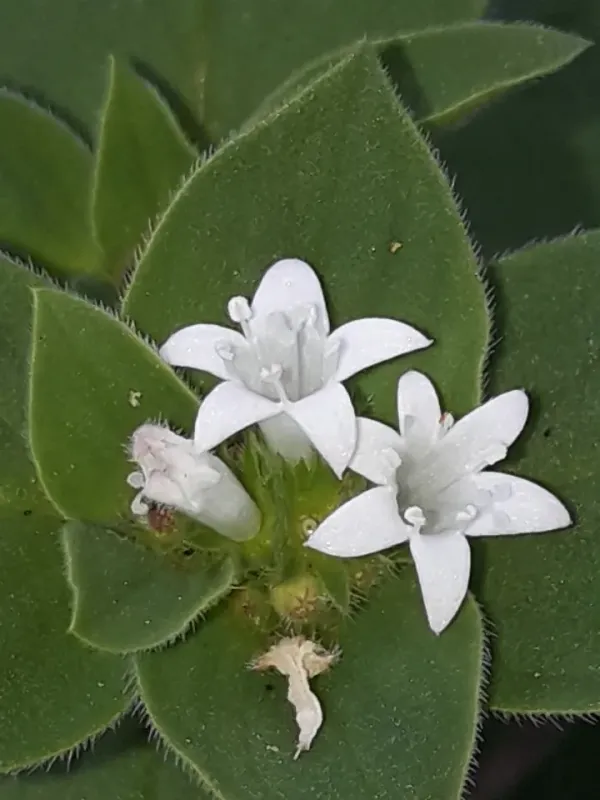
Description
Sowing dates
Richardia brasiliensis is a species within the Rubiaceae family, commonly recognized as a persistent weed in tropical and subtropical agriculture.
Seed germination typically initiates in the spring, triggered by rising soil temperatures and consistent moisture levels in the environment.
The plant exhibits rapid growth, often emerging shortly after the initial tillage operations in fields intended for maize, soy, or cotton.
Its life cycle is adapted to maximize reproductive output, producing numerous seeds that can remain viable in the soil for several seasons.
Agricultural monitoring is crucial during the early stages of crop development, as the weed can quickly surpass crops in height and density.
Growing requirements
Native to South America, this plant thrives in warm climates and has become naturalized in many regions across the globe where environmental conditions are favorable.
It prefers well-drained, sandy or loamy soils but shows remarkable adaptability to various soil types, including those with low nutrient content.
Sunlight exposure is a key requirement, as the species does not perform well in shaded or highly competitive dense canopy environments.
The plant demonstrates significant tolerance to variations in soil pH, contributing to its status as a widely distributed and problematic weed.
Water availability is essential for early growth; however, once established, its taproot allows it to survive extended periods of dry weather.
Main diseases and pests
Diseases affecting Richardia brasiliensis are primarily fungal in nature, though these rarely limit the overall population spread in farm settings.
Insect pests are generally unable to suppress the growth of this hardy weed, making natural biological control methods mostly ineffective.
Integrated weed management remains the best strategy, utilizing a mix of pre-emergent and post-emergent herbicides to reduce plant pressure.
Mechanical control, while useful, is often insufficient on its own due to the plant's ability to regenerate from the deep taproot after cutting.
Good agricultural practices, such as proper crop rotation and the use of cover crops, help to minimize the impact of this weed on yield.