
Richardia humistrata
Richardia humistrata
Description
Growing requirements
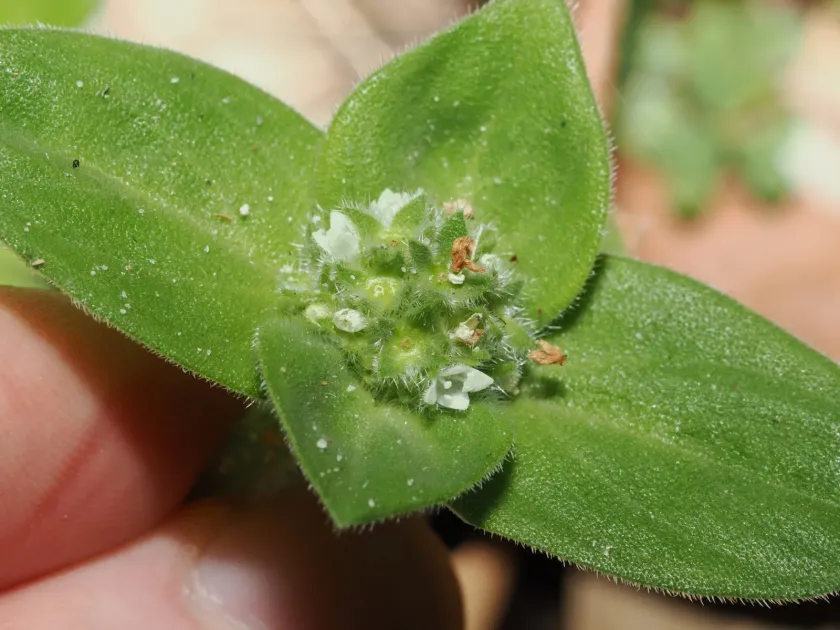
Richardia humistrata, a member of the Rubiaceae family, is recognized as a resilient herbaceous plant often appearing in agricultural landscapes. Its growth habit is characterized by prostrate stems that create dense mats, allowing the plant to dominate surface areas effectively.
The plant exhibits distinct botanical features such as elliptical, hairy leaves and small terminal inflorescences. This morphology is an adaptation to various environmental stressors, ensuring the plant survives and thrives in competitive agricultural ecosystems where other species might fail.
Soil requirements for Richardia humistrata are relatively low, as it prefers sandy to loamy textures with good drainage. It is highly capable of extracting nutrients from poor soil conditions, which contributes to its status as a persistent colonizer in disturbed lands.
Regarding climate, the plant favors warm, sunny regions. It shows remarkable tolerance to intermittent drought, thanks to its deep root system which facilitates moisture uptake during dry spells, making it a challenging species to manage in field environments.
In terms of хозяйственное использование (хозяйственное использование - land use), it is generally avoided in crop production. However, in limited ecological research, it is analyzed for its potential in soil stabilization, though this is overshadowed by its propensity to become a problematic weed.
Main diseases and pests
The primary threats to Richardia humistrata populations include various fungal pathogens that thrive in high-humidity conditions. Root rot is the most common issue, often preventing the plant from spreading if the soil remains waterlogged for extended periods.
Insects like spider mites and aphids pose constant pressure on the plant's vegetative parts. While they cause chlorosis and stunt growth, Richardia humistrata generally maintains enough vigor to withstand these infestations without significant loss of viability.
Effective management requires a combination of mechanical and chemical strategies. Shallow cultivation is generally insufficient; deep tillage is recommended to disrupt the root architecture and prevent the regeneration of the mat-forming stems that characterize this species.
Herbicide application is a standard practice for large-scale control. It is vital to use targeted systemic chemicals during the active growth phase before seed production occurs to prevent further spreading via soil movement or equipment.
Biosecurity on farms is the best defense against this weed. Ensuring that machinery is cleaned before moving between fields and using certified, weed-free seeds are essential protocols to keep Richardia humistrata populations contained and manageable.