
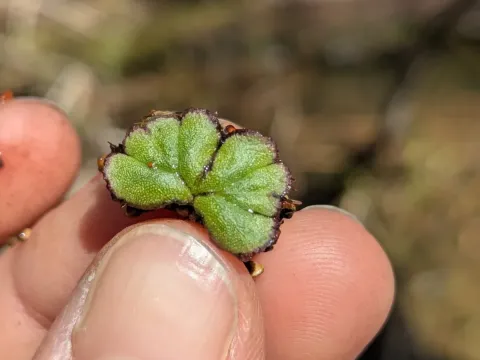
Ricciocarpos
Ricciocarpos
Ricciocarpos natans is a distinctive liverwort belonging to the Ricciaceae family. It is widely recognized as a floating aquatic plant, though it can transition to a terrestrial form when the water level of its habitat recedes.
What the section contains

Ricciocarpos
The plant is found globally in tropical and temperate regions. It thrives in stagnant or slow-moving freshwater environments such as marshes, ponds, and ditches, where organic matter is abundant and water quality remains relatively stable.
Botanic characteristics include a thalloid body that typically forms a rosette shape. On the underside, numerous long, dark-violet scales and rhizoids extend into the water, providing stability and nutrient absorption from the water column.
Climate requirements for this species are focused on temperature and light availability. It requires warm water temperatures, ideally between 20°C and 26°C, and exposure to bright, filtered sunlight to sustain its rapid vegetative growth.
As a biological agent, it plays a vital role in nutrient cycling within aquatic ecosystems. By absorbing nitrates and phosphates, it helps improve water clarity, making it a useful component in managed aquatic environments and water biofiltration systems.
The primary threat to the health of Ricciocarpos is water pollution, particularly from agricultural runoff containing synthetic fertilizers or pesticides. These substances can quickly lead to the decline of liverwort colonies.
Eutrophication caused by excess nitrogen often leads to algal blooms, which compete with Ricciocarpos for light and surface area. When the surface becomes choked with algae or invasive weeds, the liverwort is unable to sustain photosynthesis.
Aquatic pests, including various species of snails and some small crustacean larvae, may feed on the tender tissues of the thallus. While minor damage is usually tolerable, large infestations can cause significant population loss.
Fungal pathogens pose a risk when the plant is stressed by cold temperatures or poor water circulation. Once a fungal infection takes hold, it spreads rapidly through the interconnected thalli, leading to systemic decay.
Environmental stability is crucial, as extreme fluctuations in pH or sudden temperature drops can force the plant into a dormant state or cause permanent tissue damage. Maintaining steady water conditions is essential for successful cultivation.