
Rhytidiadelphus squarrosus
Rhytidiadelphus squarrosus
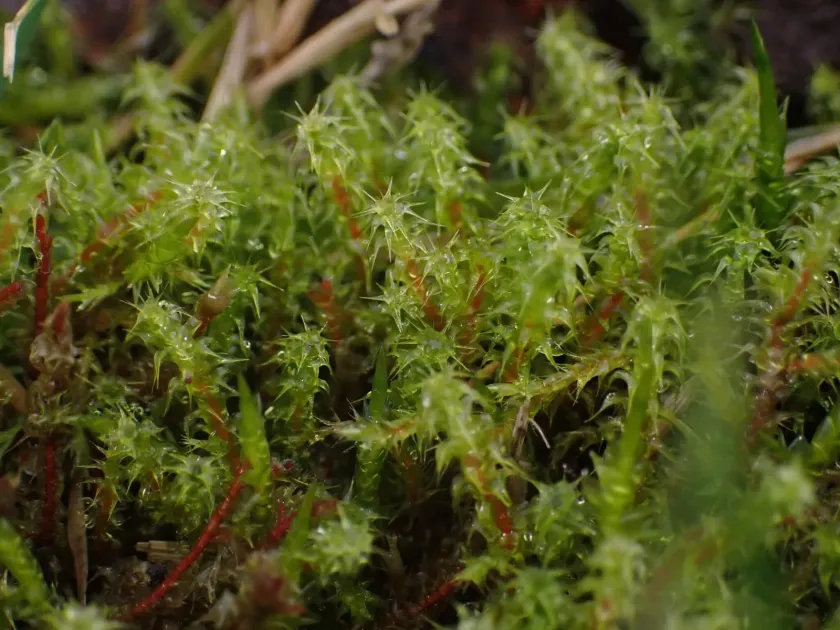
Description
Growing requirements
Rhytidiadelphus squarrosus, commonly known as the squarrose moss, belongs to the Hylocomiaceae family. In agricultural settings, it is often viewed as a persistent weed that invades pastures, meadows, and lawns, particularly in regions with high moisture levels.
The moss is widely distributed across the temperate zones of the Northern Hemisphere. It thrives in humid environments and is capable of colonizing various soil types, provided they are sufficiently damp and have low competition from tall vegetation.
Botanically, it is characterized by its distinctively recurved (squarrose) leaves. This growth form allows the plant to trap moisture and nutrients efficiently, enabling it to form dense mats that effectively suppress the growth of grass seedlings.
Regarding climatic needs, the species prefers cool, moist conditions with consistent rainfall. It is not dependent on specific soil fertility but relies heavily on high humidity and shade, making it a common sight in poorly drained agricultural land.
Its vegetative propagation is rapid, allowing it to spread from small fragments across a field. This adaptation makes it difficult to eradicate once it establishes a foothold in managed turf or grassland areas.
Main diseases and pests
The main strategy for managing Rhytidiadelphus squarrosus is the improvement of soil drainage. As this moss thrives in wet, compacted conditions, aeration is a critical tool for reducing its vigor and creating an environment unfavorable for its growth.
Cultural control includes maintaining an optimal soil pH. Since this species often favors slightly acidic conditions, applying lime to the soil can help promote the growth of grasses while simultaneously inhibiting the moss's ability to compete effectively.
For chemical suppression, iron-based solutions are frequently used in professional turf management. These products can selectively desiccate the moss tissues without causing significant harm to the surrounding turfgrass species.
Over-seeding and regular fertilization are essential practices to ensure a dense stand of desirable forage crops. A thick, healthy canopy prevents the moss from receiving the light and space it requires for colonization.
Finally, reducing shade is important. By thinning tree branches or clearing obstructions that create dark, damp pockets in fields, managers can reduce the moss population naturally by changing the microclimate to be more arid and sunny.