
Rhoicissus tomentosa
Rhoicissus tomentosa
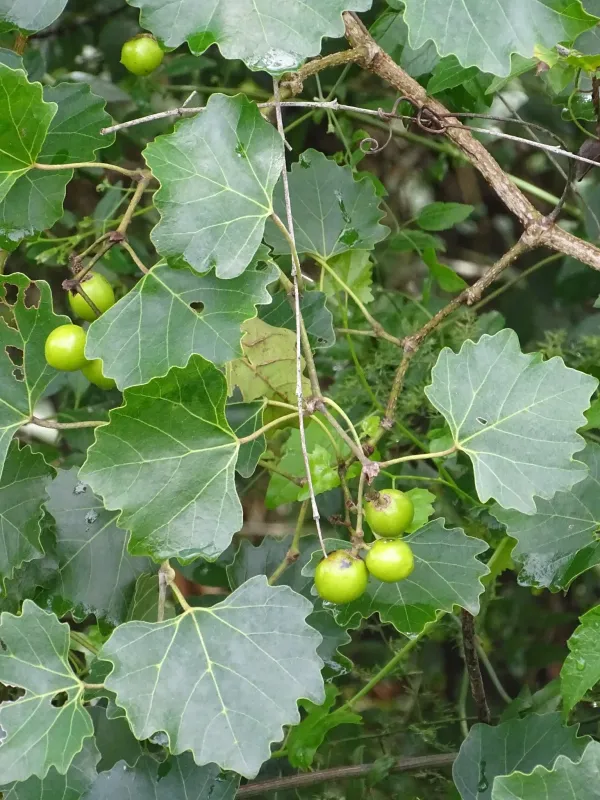
Description
Growing requirements
Rhoicissus tomentosa, belonging to the Vitaceae family, is an evergreen vine native to the subtropical regions of South Africa. In its natural habitat, the plant acts as a climber, using tendrils to ascend forest trees, showcasing its vigorous growth habit.
The culture requires bright, indirect light for optimal development. Direct exposure to intense sunlight can damage the delicate, velvety texture of the foliage. Maintaining a stable temperature range between 20°C and 25°C is essential for maintaining consistent growth throughout the year.
Soil requirements focus on fertility and drainage. A standard potting mix consisting of loamy soil, organic compost, and coarse sand provides the necessary aeration for the root system. Proper drainage is a critical technical requirement to prevent waterlogging and root asphyxiation.
Irrigation management involves keeping the substrate consistently moist but not saturated. During the active growing season, regular watering is required, while winter irrigation should be significantly reduced. Humidity levels should be kept moderate to maintain the plant's aesthetic appeal.
The primary economic and horticultural application of this plant is interior landscaping. It is highly valued for its rapid growth, dense foliage, and adaptability to indoor environments, making it a staple in ornamental horticulture and large-scale botanical displays.
Main diseases and pests
Common pests associated with Rhoicissus tomentosa include spider mites and scale insects, which frequently infest the plant under low-humidity conditions. Regular monitoring and the application of horticultural soaps or specific miticides are recommended for effective pest management.
Root rot, often caused by fungal pathogens, is the most common disease triggered by poor drainage or overwatering. Maintaining a strict sanitation protocol, including sterile pots and proper substrate sterilization, helps minimize the risk of developing these persistent soil-borne diseases.