
Rhodanthemum hosmariense
Rhodanthemum hosmariense (Ball) B. H. Wilcox et al.
Description
Sowing dates
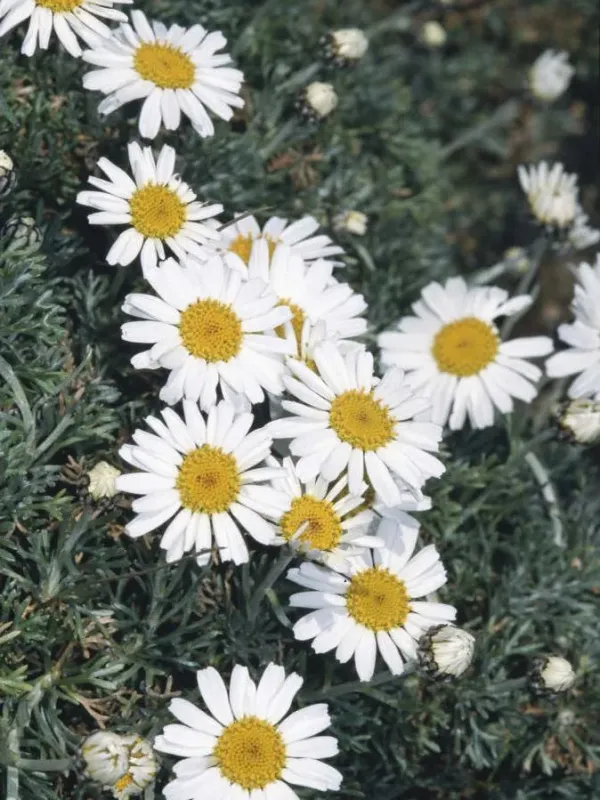
Rhodanthemum hosmariense, commonly known as the Moroccan daisy, is an attractive perennial shrublet belonging to the Asteraceae family. It is highly valued for its striking silver-grey fern-like foliage and white daisy-like flowers that bloom extensively during the growing season.
Propagation is primarily achieved through seeds sown in early spring in a greenhouse or cold frame. Using a well-draining, gritty seed-starting mix is essential to prevent damping-off, which is a common risk for these sensitive seedlings during the initial germination phase.
When sowing directly into the garden, one should wait until late spring when the danger of frost has passed and the soil has sufficiently warmed. Planting should be done in a sunny, elevated position to ensure optimal growth and prevent water stagnation around the base of the plant.
Vegetative propagation via cuttings is a very popular technique among nursery growers. Taking softwood cuttings in late summer or early autumn allows for the creation of new, genetically identical plants that maintain the compact habit of the parent specimen.
Botanically, this species originates from the Atlas Mountains of Morocco, meaning it is evolutionary adapted to rocky, skeletal soils. This origin informs its use in modern horticulture as a staple for xeriscaping and rock garden designs.
Growing requirements
The primary requirement for successfully growing Rhodanthemum hosmariense is full sun exposure. It needs at least six to eight hours of direct light daily to maintain its compact growth habit and produce an abundance of its signature white flowers.
Soil conditions are critical for this species; it requires exceptionally well-draining, gritty, or sandy soil. Heavy, nutrient-rich soils that retain moisture will inevitably lead to root rot and premature decline, making the plant unsuitable for standard garden borders without soil modification.
The plant is remarkably drought-tolerant once established and requires minimal watering. During the summer, it is best to allow the soil to dry out completely between waterings, as the plant is adapted to the arid conditions of high-altitude rocky environments.
Regarding soil chemistry, the Moroccan daisy prefers a neutral to slightly alkaline pH. If your garden soil is naturally acidic, incorporating lime or crushed limestone can help mimic the plant’s native habitat conditions and encourage healthier growth.
While the plant is hardy, it struggles with prolonged exposure to winter wetness combined with hard frost. In colder regions, it is advisable to grow it in containers or provide excellent drainage and protection from winter precipitation to ensure it survives the season.
Main diseases and pests
The greatest threat to Rhodanthemum hosmariense is high humidity and waterlogged soil. These conditions facilitate the growth of various pathogenic fungi, which can cause crown and root rot, often leading to the sudden collapse of the plant during or after rainy periods.
Powdery mildew may occur if the plant is grown in areas with poor air circulation. To mitigate this risk, it is important to provide sufficient spacing between plants and to avoid overhead irrigation, which keeps the foliage damp for extended periods.
Aphids can occasionally infest the flower buds and young growth. While these pests rarely kill a healthy, mature plant, they can distort the blooming process and weaken the plant, necessitating the use of insecticidal soaps or neem oil for control.
Spider mites are another potential pest, especially in hot, dry summers when the plant is under stress. Regular monitoring and maintaining proper soil moisture levels can help the plant stay vigorous enough to resist severe infestations.
The key to effective pest and disease management is strictly following the required cultural practices: prioritize drainage, provide full sun, and remove any dead or decaying foliage to ensure the plant remains clean and resistant to potential threats.