
Rhodanthemum gayanum
Rhodanthemum gayanum (Coss. & Durieu) B. H. Wilcox et al.
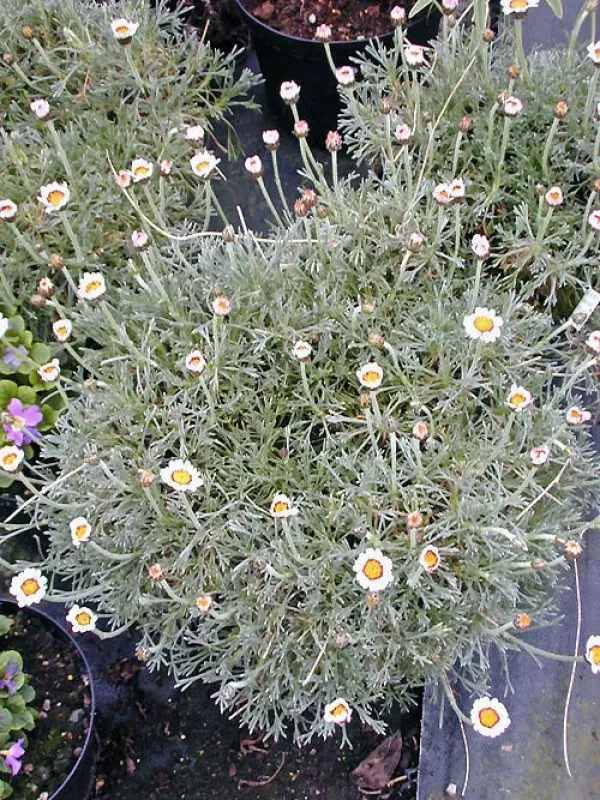
Description
Sowing dates
Sowing seeds of Rhodanthemum gayanum is best performed in late winter or early spring in a controlled greenhouse environment. The seeds should be sown on a light, well-draining seed-starting mix to ensure successful germination.
Seeds are light-dependent, so they should be surface-sown and only lightly pressed into the soil. Maintaining a temperature range between 18–20 degrees Celsius is essential for optimal sprouting rates.
Once seedlings develop their first true leaves, they should be transplanted into individual pots to encourage a strong root structure. Hardening off is a mandatory process before planting them in permanent outdoor locations.
For outdoor planting, ensure that all risks of frost have passed. Space the plants approximately 30–40 centimeters apart to allow for proper airflow, which is critical for the long-term health of this species.
Vegetative propagation via cuttings during the summer months is a reliable method for maintaining the specific traits of the plant. Cuttings should be rooted in a sandy, moist medium under a plastic cover.
Growing requirements
Rhodanthemum gayanum belongs to the Asteraceae family and is recognized for its finely dissected silvery foliage and daisy-like flowers. It is an excellent candidate for xeriscaping and rock gardens.
The species requires full sun exposure to thrive and maintain its compact, attractive growth habit. Inadequate light results in weak, spindly stems and reduced floral production throughout the season.
Soil requirements are modest, focusing primarily on excellent drainage. The plant is well-adapted to poor, sandy, or rocky soils, which mimic its natural environment and prevent root rot.
This plant is highly drought-tolerant once established and does not require frequent irrigation. Over-watering is detrimental, as it often leads to fungal pathogens that can destroy the root system.
In regions with harsh winters, providing protection from excess moisture is more important than protection from cold temperatures. Well-drained sites prevent the crown from rotting during dormant periods.
Main diseases and pests
Fungal issues are the primary threat to Rhodanthemum gayanum, particularly when the plant is grown in humid or poorly drained conditions. Root rot is the most common disease associated with over-irrigation.
Powdery mildew may manifest as a white film on the leaves during periods of fluctuating temperatures. Good air circulation and keeping the foliage dry are the best preventative measures for this ailment.
Aphids can be a problematic pest during the active growth season, feeding on the tender buds and young stems. Early detection and the use of insecticidal soap are usually effective against these infestations.
Spider mites are common in hot, dry conditions and can cause the leaves to lose their vibrant color. Regularly checking the underside of leaves for webbing is recommended for early intervention.
Slugs and snails may occasionally damage the foliage, especially in newly planted beds. Implementing barrier methods, such as copper tape or crushed eggshells, can help protect the plants from such damage.