
Rhodanthemum hybrid
Rhodanthemum catananche x Rhodanthemum gayanum (Coss. & Durieu) B. H. Wilcox et al.
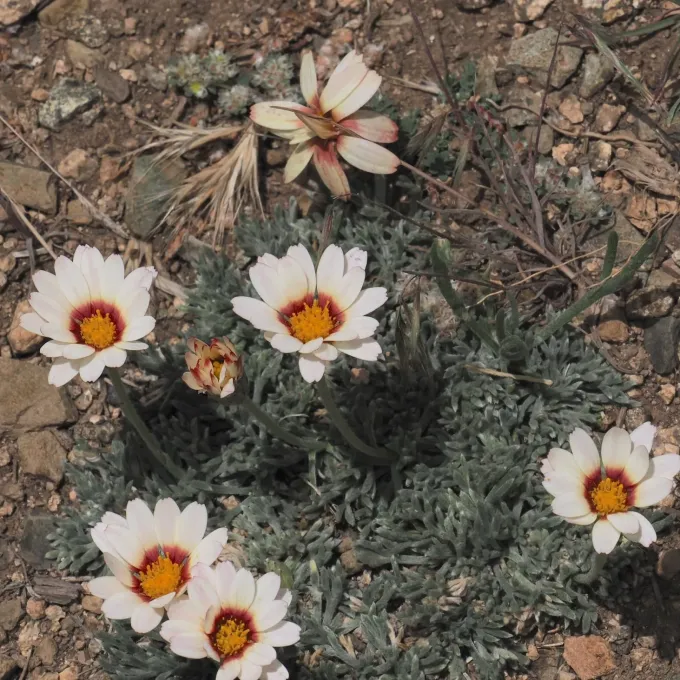
Description
Sowing dates
Rhodanthemum hybrid is propagated primarily by seeds or stem cuttings. Sowing seeds indoors should be done in late February or March to ensure robust seedlings are ready for the start of the summer season.
Seeds require surface sowing, as they need exposure to light for successful germination. They should only be lightly dusted with vermiculite or sand, ensuring the substrate remains consistently moist during the germination period.
When using the cutting method, propagation material is harvested in late summer, selecting lateral shoots that have not yet produced buds. Cuttings are rooted in a light, sandy medium in a sheltered, shaded location.
Transplanting hardened seedlings into the open ground occurs once the danger of late spring frosts has passed. The optimal time is late May, when the soil has warmed up sufficiently for root system development.
A planting density of 30 to 40 centimeters between plants is recommended, allowing the Rhodanthemum to develop its full shape and form a dense decorative mound of foliage and daisy-like blooms.
Growing requirements
Rhodanthemum hybrid belongs to the Asteraceae family and is a compact perennial originating from the mountain regions of North Africa. It is highly valued for its silvery, finely dissected foliage and prolific daisy-shaped flowers.
This crop has strict light requirements: to thrive and produce flowers, it must be planted in fully open, sunny locations in the garden, free from any competing shade or obstructions.
The soil must be light, well-draining, and ideally have an alkaline or neutral pH. Heavy clay soils are detrimental to this plant, as they contribute to moisture retention near the root collar, leading to decay.
Watering should be kept moderate. The plant exhibits high levels of drought tolerance and handles excess moisture poorly, as waterlogging frequently triggers root rot. Established plants require minimal supplemental irrigation.
In regions with harsh winters, Rhodanthemum requires reliable winter protection or should be grown as a container plant with winter storage in a cool, frost-free room, as its hardiness is limited to USDA zones 7–9.
Main diseases and pests
The primary threat to the health of Rhodanthemum hybrid is waterlogged soil, which leads to the development of fungal diseases like root rot. Ensuring an adequate drainage layer at the time of planting is essential.
Excessive air humidity also promotes the occurrence of powdery mildew. During periods of prolonged rainfall, preventative application of systemic fungicides is recommended to inhibit the spread of fungal spores.
Common pests include aphids and spider mites, particularly during hot and dry summer months. Regular inspection of the underside of the leaves is crucial for the early detection and management of pest colonies.
To control pests, use appropriate insecticides or acaricides according to the manufacturer's labels. Biological controls, such as insecticidal soap solutions, are effective if the infestation level is low.
Gardeners should also monitor for slugs and snails, which may feed on fresh spring growth. Spreading a layer of gravel or sand mulch around the base of the plants effectively deters mollusks from reaching the stems.