
Rhexia nashii
Rhexia nashii
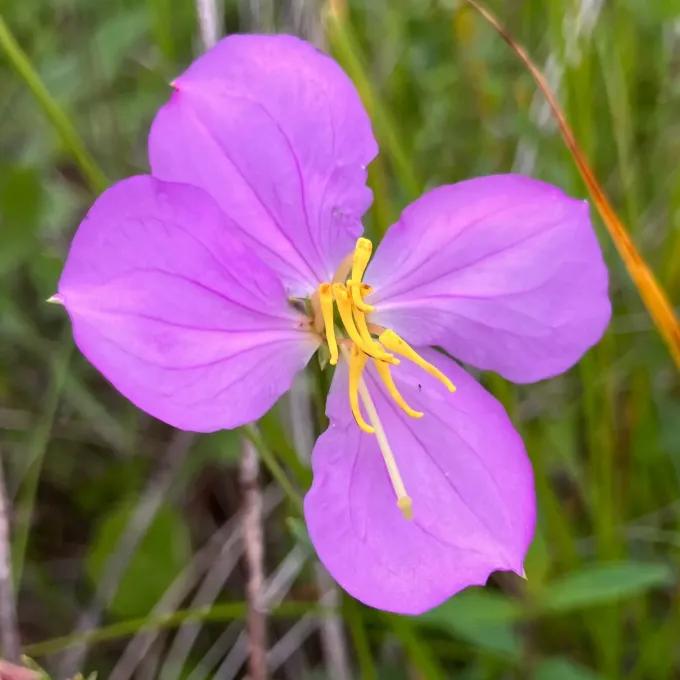
Description
Growing requirements
Rhexia nashii, commonly known as a type of meadow beauty, is a perennial herbaceous plant belonging to the Melastomataceae family. Native to the southeastern United States, it thrives in environments characterized by high moisture, such as wet pine flatwoods and the edges of ponds and marshlands.
The plant is distinguished by its vibrant, four-petaled flowers that often feature deep pink to magenta hues. It grows from a tuberous root system, which allows it to persist through seasonal fluctuations in its native habitat while maintaining its foliage during the active growing season.
Cultural requirements emphasize the need for consistent moisture. Unlike many garden perennials, this species will not tolerate drying out and performs best when planted in boggy areas or damp, well-draining soil where water levels remain high throughout the summer.
The soil pH must be acidic to support healthy growth. Gardeners should avoid alkaline substrates and limestone amendments, as they significantly inhibit the plant's ability to absorb essential nutrients, often leading to stunted growth or chlorosis of the foliage.
Full sun is required for optimal flowering performance. While the plant can tolerate partial shade, insufficient light often results in "leggy" growth and fewer blossoms. Proper spacing is also essential to ensure adequate air circulation, which helps maintain the overall health of the planting bed.
Main diseases and pests
Fungal diseases, including leaf spot and powdery mildew, represent the most frequent threat to Rhexia nashii. These issues are exacerbated by poor air circulation or overcrowding, leading to moisture accumulation on the leaves for extended periods.
Aphids and spider mites are the primary pests encountered during the growing season. Spider mites, in particular, are attracted to the plant when ambient humidity drops too low or when the plant experiences drought stress, necessitating supplemental watering to keep them at bay.
Root rot can occur if the soil structure becomes too compact or if the planting site lacks proper drainage, despite the plant's love for moisture. It is crucial to distinguish between a "wet" environment and a "stagnant" one, as the latter quickly kills the root system.
Weed competition is a significant threat during the establishment phase. Because the plant has a relatively delicate root system, careful hand weeding is recommended to prevent damage to the tubers, rather than using mechanical hoes or aggressive cultivation tools.
To maintain a robust population, remove diseased foliage immediately upon detection to prevent the spread of spores. Keeping the garden area clean and ensuring that water is applied primarily to the root zone, rather than over the canopy, will minimize disease outbreaks significantly.
Harvesting
While Rhexia nashii is primarily a decorative species rather than a commercial crop, seed harvesting can be conducted for propagation purposes. Seeds are typically ready for collection in late summer or autumn once the seed capsules turn brown and dry.
Care must be taken during the harvesting process, as the seed pods can shatter easily, scattering the tiny seeds prematurely. It is recommended to place a small paper bag over the ripening capsules to capture the seeds as they naturally release from the plant.
After collection, seeds should be cleaned of any debris and stored in a cool, dry place. For best germination rates, many growers prefer to mimic natural cycles by providing a period of cold stratification before sowing them in the spring.
If the goal is to expand a patch within a garden, division of the tuberous roots is often a more effective method than harvesting seeds. Division is best performed during the dormant season, ensuring each segment has a healthy portion of the root structure.
For those interested in cut flowers, harvesting should occur early in the morning when the blossoms are fully hydrated. Note that the stems are delicate and should be placed immediately into clean water to prevent wilting, although their vase life is generally quite short.