
Eastern redbud
Cercis canadensis L.
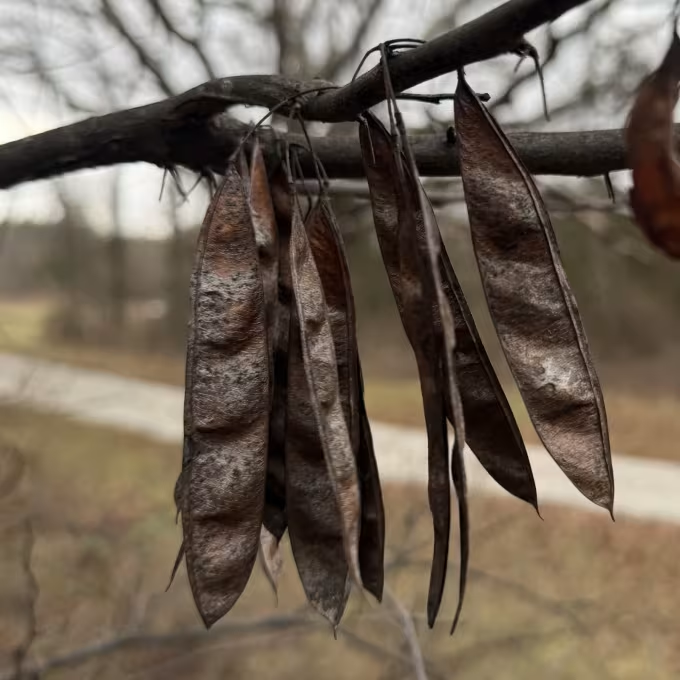
Description
Growing requirements
The Eastern redbud (Cercis canadensis L.) is a remarkable deciduous tree belonging to the Fabaceae family. It is widely recognized for its spectacular display of rosy-pink flowers that emerge in early spring directly from the trunk and woody branches, a botanical trait known as cauliflory.
Native to North America, the species thrives in woodlands and forest margins. Its natural habitat suggests a preference for sites that offer protection from harsh winds and provide sufficient light, although the tree exhibits moderate shade tolerance in warmer regions.
Regarding soil, the Eastern redbud requires well-drained, fertile, and slightly alkaline to neutral soil. It does not tolerate waterlogged sites, which often lead to root rot. Deep, nutrient-rich loam is ideal for promoting rapid growth and maintaining the structural integrity of the tree.
Cultural practices include ensuring adequate hydration during the establishment phase. While mature trees demonstrate significant drought tolerance, providing supplemental water during prolonged heat waves ensures the foliage remains vibrant and resistant to summer scorch.
In terms of usage, the Eastern redbud is a staple in ornamental horticulture. Its aesthetic value is enhanced by heart-shaped leaves that turn a distinct golden-yellow in autumn, making it a versatile choice for both residential landscapes and public urban planning projects.
Main diseases and pests
Verticillium wilt is considered one of the most critical diseases affecting Cercis canadensis. It is caused by soil-borne fungi that block the tree's vascular system, leading to rapid branch dieback and, in severe cases, the eventual death of the entire specimen.
Botryosphaeria canker is another prevalent issue, manifesting as sunken, discolored areas on the bark. These cankers can girdle branches and the main trunk, especially if the tree is under physiological stress from drought or improper pruning wounds.
Common pests include aphids and leafhoppers, which congregate on the undersides of leaves and on succulent new shoots. Their feeding can cause chlorosis, leaf distortion, and the transmission of secondary viral infections, necessitating regular monitoring.
Effective pest and disease management involves strict sanitation practices, such as removing and destroying infected plant debris. Using sterilized pruning tools is essential to prevent the mechanical transmission of pathogens between healthy and affected branches.
Applying balanced, slow-release fertilizers in early spring supports overall tree vigor, enabling it to better resist environmental stressors. Avoiding excessive fertilization helps maintain a natural growth rate, which is less susceptible to breaking under snow or ice loads.