
Cercis griffithii
Cercis griffithii Boiss.
Description
Sowing dates
Seed propagation of Cercis griffithii requires preliminary preparation of the planting material. The seeds have a tough coat, so scarification is necessary for successful germination, followed by stratification in cool conditions for 2–3 months.
Sowing seeds in open ground or seedling trays is recommended in the spring period, once the threat of night frosts has passed. The optimal soil temperature for the germination of this species is 18–22 degrees Celsius.
When sowing, it is important to observe the correct planting depth, which is typically about 1–2 centimeters. Planting too deep may slow down germination or lead to seed rot in heavy substrates.
To speed up the process, growth stimulants can be used to increase germination energy and seedling viability. Initial seedling care includes regular but moderate watering without over-saturation.
Once seedlings reach 1–2 years of age, it is recommended to transplant them to their permanent location. The plant does not tolerate transplanting well at a more mature age due to the specific structure of its root system.
Growing requirements
Cercis griffithii belongs to the Fabaceae family and is a deciduous shrub or small tree native to the arid zones of Central Asia. The plant is adapted to the conditions of a sharply continental climate with hot summers and cold winters.
The culture has high lighting requirements: for full development and flowering, it is necessary to select open, well-warmed sunny areas. In the shade, the plant's ornamental appeal decreases significantly, and flowering becomes sparse.
The plant is relatively undemanding regarding soil conditions, although it prefers light, well-drained, slightly alkaline, or neutral soils. It tolerates calcareous soils well, which is typical for its natural habitat.
Drought tolerance is an important characteristic of this culture, allowing it to be used in landscape design in regions with moisture deficits. Young saplings require regular watering until fully established, after which irrigation needs decrease.
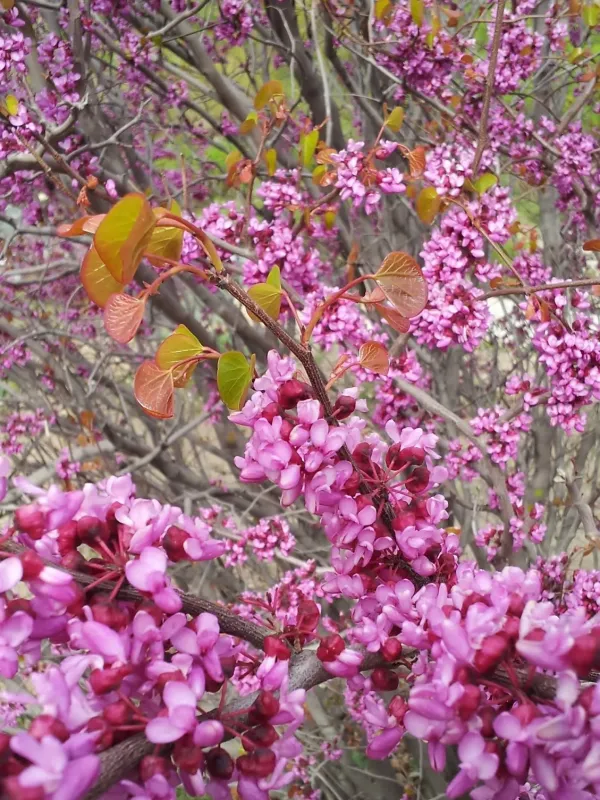
The plant possesses specific botanical features: the leaves have a rounded shape, and the flowers, characteristic of all Cercis species, appear on the branches before the leaves unfurl. This makes it a valuable asset for landscaping.
Yield
The commercial use of Cercis griffithii is focused primarily on ornamental horticulture and park construction. It is not considered an agricultural crop for food production or animal fodder.
Under nursery conditions, the yield of high-quality planting material depends on maintaining moisture regimes and timely fertilization. The value of the culture lies in its high aesthetic appeal during the mass flowering period.
Using the plant in urban landscaping allows for the creation of striking color accents in the spring. Due to its ability to fix nitrogen from the air, Cercis can also improve the soil structure where it grows.
The productivity of the shrub with proper care is expressed in abundant annual flowering, which lasts for several weeks. This property makes it highly sought after in landscape projects of varying complexity.
The wood of Cercis can be used in the artisanal production of small decorative items, but this direction is secondary compared to the use of the plant as a living element of the landscape.
Main diseases and pests
One of the most common problems in cultivating this species is verticillium wilt, which affects the plant's vascular system. To prevent the disease, it is essential to ensure high-quality soil drainage.
Pests, such as psyllids, can damage the crown's ornamental look by sucking sap from young leaves. Periodic inspection of the plant for traces of insect activity is recommended.
Root rot, arising from water stagnation, poses a lethal threat to Cercis. It is strictly inadvisable to plant the tree in areas where the groundwater level rises too high during the spring season.
Disease prevention includes sanitary pruning of infected branches and the use of fungicides in case of fungal infection detection. It is important to maintain optimal soil aeration around the trunk.
- Keep proper spacing during planting to ensure crown ventilation.
- Regularly remove fallen leaves where pathogens may overwinter.
- Use quality planting material free from signs of damage.