
Eastern redbud
Cercis canadensis L. var. canadensis
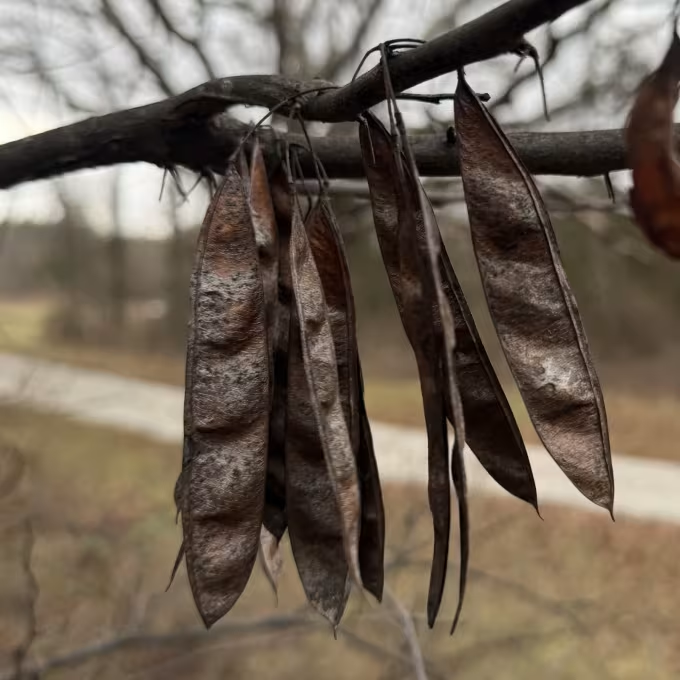
Description
Sowing dates
Sowing Eastern redbud seeds requires pre-stratification to overcome deep embryo dormancy. In natural conditions, seeds undergo this process during winter; therefore, in nurseries, they are kept in a refrigerator at temperatures between +1°C and +5°C for 2–3 months.
The optimal time for outdoor sowing is spring, immediately after the snow melts and the soil warms up. Seeds are typically scarified, by carefully damaging the hard outer coat, or soaked in hot water for about 24 hours to accelerate germination.
Seeds should be planted at a depth of 1–2 centimeters. The soil must be light, nutrient-rich, and well-drained to prevent the young seedlings from rotting during spring rains.
While vegetative propagation through cuttings or layering is possible, it is considered less productive for Cercis canadensis due to low rooting rates. The use of rooting hormones significantly improves success rates when propagating via cuttings.
Young seedlings in their first year require regular watering and protection from direct, intense midday sun, as their root systems are not yet developed enough to maintain adequate moisture balance independently.
Growing requirements
The Eastern redbud is a deciduous tree belonging to the Fabaceae family, prized for its early and prolific blooming before the leaves appear. Native to North America, it naturally thrives on forest edges and hillsides.
The plant is light-loving; for full development and intense flowering, it should be planted in open, sunny locations protected from strong, cold winds.
It has moderate soil requirements, preferring fertile, neutral, or slightly alkaline loams. It does not tolerate heavy clay soils with water stagnation, as this often leads to root rot.
The Eastern redbud has higher cold tolerance than many related species, allowing it to be cultivated successfully in temperate regions, provided that young specimens are protected during their first few years of growth.
Cultivation practices include regular but moderate watering during dry spells, applying complex mineral fertilizers in early spring, and mulching the root zone to maintain soil structure and moisture levels.
Main diseases and pests
The main diseases affecting this culture include fungal infections such as verticillium wilt, which manifests as sudden yellowing and dieback of individual branches. To prevent this, it is crucial to avoid damaging the bark and roots during soil cultivation.
Leaf spots can develop under conditions of high humidity and poor air circulation. Effective management strategies involve sanitary pruning and applying fungicides to the crown at the beginning of the growing season.
Pests that threaten the redbud include psyllids and aphids, which suck sap from young shoots. In cases of severe infestation, systemic insecticides are recommended for control.
Scale insects can attack the bark, gradually weakening the tree and reducing its aesthetic value. Regular inspection of the trunk and primary branches allows for early detection and targeted treatments.
Maintaining a high standard of horticultural practice is essential, as trees stressed by drought or nutrient deficiency become significantly more susceptible to a wide range of pathogens and insect pests.