
Pimelea physodes
Pimelea physodes Hook.
Description
Growing requirements
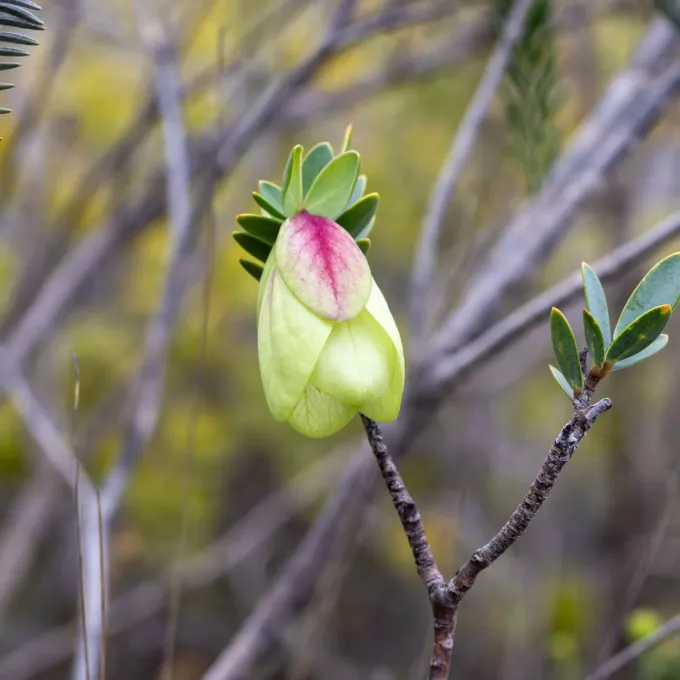
Pimelea physodes, commonly known as quail bells, is a striking shrub belonging to the Thymelaeaceae family. Endemic to Western Australia, it is highly valued for its large, inflated, bell-shaped bracts that protect the flower clusters.
This species thrives in well-drained, sandy, or stony soils that are typically low in organic matter. Proper drainage is the most critical factor, as this plant is extremely susceptible to root rot in waterlogged conditions.
In terms of climatic needs, Pimelea physodes prefers a Mediterranean-style climate with dry summers and mild, wet winters. It requires a sunny, open position to flourish and produce its iconic floral display.
Cultivation requires caution with fertilization, particularly regarding phosphorus. Like many Australian native plants, it has evolved to extract nutrients from nutrient-poor soils and can suffer from phosphorus toxicity if fed standard commercial fertilizers.
For best results in a garden setting, the plant should be mulched with gravel to keep the root collar dry. Minimal pruning after flowering helps maintain a compact shape and encourages new growth for the next season.
Main diseases and pests
The most common threat to the health of this shrub is the fungal pathogen Phytophthora, which attacks the roots in heavy, damp soils. Ensuring the site has excellent drainage is the primary defense strategy.
Pests such as spider mites and mealybugs can occasionally infest the foliage, especially in greenhouse or indoor environments where air circulation is poor. Regular inspection and localized treatment are recommended.
Sensitivity to chemical fertilizers makes it vulnerable to soil salinity. Over-fertilization leads to yellowing of leaves and eventual plant death, making it essential to use low-phosphorus fertilizers or compost only.
Extreme temperature fluctuations and exposure to heavy frost can damage the succulent-like bracts and thin branches. In regions with harsh winters, protection or cultivation in portable containers is advised.
Improper watering routines, characterized by irregular patterns, can cause the plant to drop its leaves prematurely. A consistent, deep-soaking method is preferred, followed by drying out of the topsoil layers.