
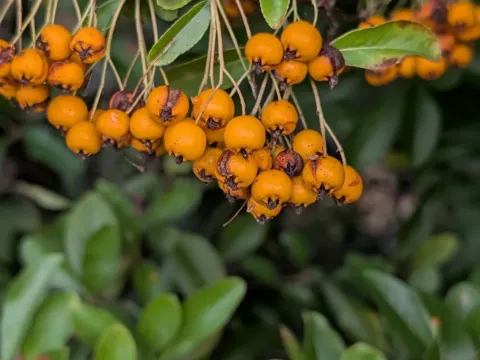
Pyracantha
Pyracantha M.J. Roem.
Pyracantha, commonly known as firethorn, is a genus of thorny evergreen shrubs belonging to the Rosaceae family. These plants are widely valued in landscaping for their dense, protective foliage and their spectacular clusters of berries that persist through the winter months.
What the section contains


Pyracantha
Originating from regions across Eurasia, Pyracantha adapts well to various environments, provided they are not subject to prolonged extreme frost. The plant prefers sunny locations with partial shade potential, as abundant sunlight is crucial for heavy fruit production.
Regarding soil, the culture is quite versatile, thriving in most well-drained soil types. It performs best in neutral to slightly alkaline pH levels, and once established, it demonstrates a notable tolerance to periods of drought, making it a low-maintenance landscape choice.
Agrotechnical management primarily involves pruning, which is necessary to maintain shape and encourage dense growth. Gardeners should exercise caution while pruning, as the plant features long, sharp spines that can cause significant skin injury if not handled with proper gloves.
Economically, the primary utility of Pyracantha is the construction of defensive hedges and screen walls. Beyond aesthetics, it serves as a critical habitat and food source for various bird species, which consume the berries when other food supplies are scarce during winter.
The most devastating disease affecting Pyracantha is fire blight (Erwinia amylovora). This bacterial infection causes scorched-looking foliage and dead branches, requiring immediate pruning of infected wood and disposal to protect neighboring plants.
Scab infections are frequent, especially during humid seasons, leading to unsightly blemishes on leaves and fruit. Proper spacing between individual plants is a key preventive measure to ensure adequate airflow and reduce the humidity around the canopy.
Aphids represent the most common insect threat, typically clustering on young, succulent growth. They weaken the plant by extracting sap and can also attract secondary problems like sooty mold through their honeydew secretions.
Scale insects can be persistent pests that are often difficult to detect until they have established a significant colony. Application of horticultural oils or systemic insecticides is often necessary to control these infestations effectively.
Root rot remains a concern in poorly drained soils or areas prone to waterlogging. To mitigate this, site preparation must include the addition of organic matter or inorganic material to improve drainage, preventing the roots from suffocating.