
Pyracantha rogersiana
Pyracantha crenulata (D. Don) M. Roem. var. rogersiana A. B. Jacks.
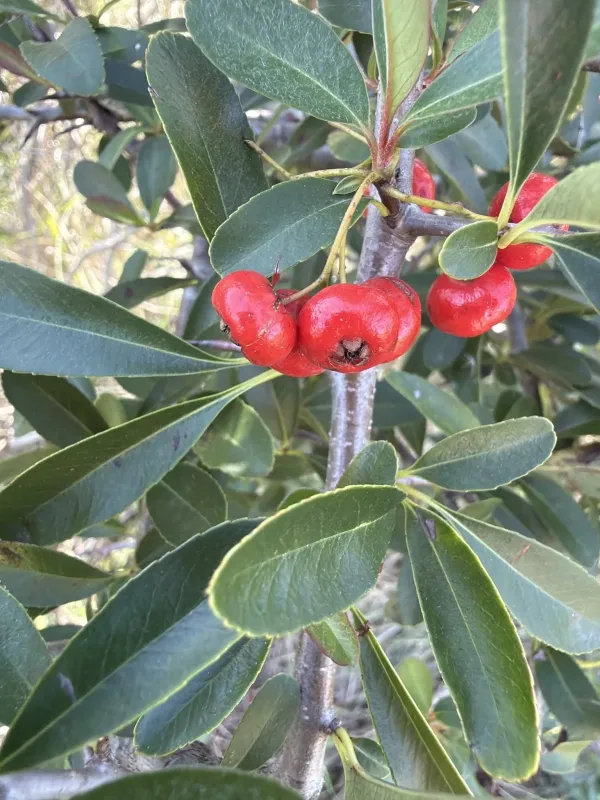
Description
Growing requirements
Pyracantha rogersiana, also known as Rogers' firethorn, is an evergreen shrub belonging to the Rosaceae family. Native to the mountainous regions of China, this species is highly valued for its striking berries and architectural form.
The plant thrives in full sun or partial shade, requiring well-drained soil to prevent root rot. It is adaptable to a variety of soil types, but prefers fertile loams with a neutral to slightly alkaline pH balance.
Climate requirements include protection from severe, drying winds during the winter months. While reasonably hardy, young plants benefit from mulch applied to the base to protect roots from extreme temperature fluctuations.
Agronomic maintenance centers on pruning, which is essential for shaping the shrub and encouraging dense growth. This species is excellent for defensive hedging because of its thorns, which act as a natural barrier in gardens.
Watering should be balanced; while the shrub has some drought tolerance once established, consistent moisture during the growing season significantly enhances foliage density and fruit production.
Main diseases and pests
The most significant disease threat to this culture is fire blight, caused by bacteria. Pruning out infected branches at the first sign of symptoms is critical to prevent the spread of the pathogen.
Fungal infections, such as scab, can manifest under humid conditions, causing leaf spotting and premature defoliation. Preventive applications of copper-based fungicides are often recommended in early spring.
Aphids are the most common insect pests, typically clustering on tender new shoots. Regular monitoring and the use of insecticidal soaps or systemic pesticides are effective control measures.
Scale insects can also pose a risk, causing yellowing and stunted growth. Because these insects have protective shells, systemic treatments are usually more effective than contact sprays.
Good cultural practices, such as maintaining proper spacing to ensure adequate air circulation and removing leaf litter, help create an environment less hospitable to common garden pests and diseases.