
Firethorn
Pyracantha crenatoserrata (Hance) Rehder
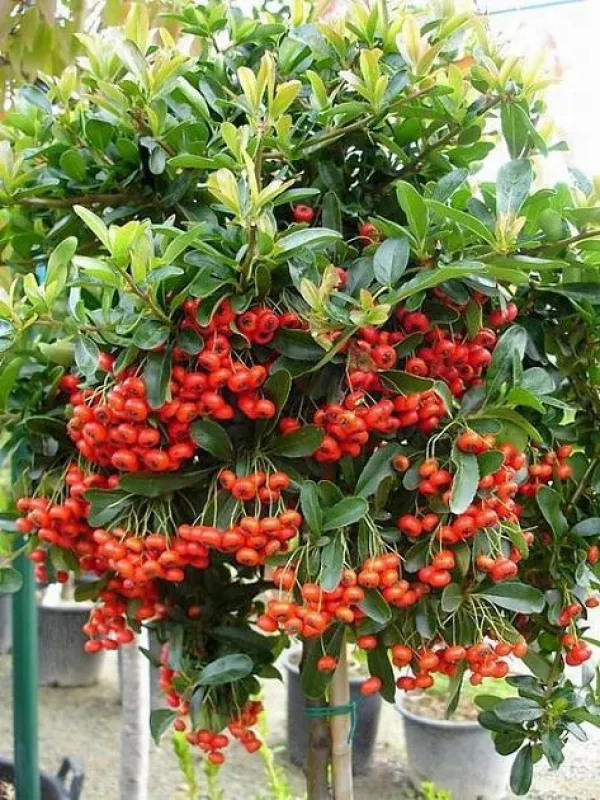
Description
Growing requirements
Pyracantha crenatoserrata is an evergreen shrub belonging to the Rosaceae family. Native to China, this species is widely recognized for its robust growth habit and brilliant clusters of berries that persist through winter months.
The plant thrives in full sun or light shade, provided it is protected from harsh, drying winds. It is adaptable to a wide range of soil types, preferring well-drained, fertile substrates that allow deep root penetration.
Water requirements are moderate, although consistent irrigation is essential during the establishment phase. Once mature, the plant exhibits significant drought tolerance, making it an excellent choice for low-maintenance landscapes.
Pruning is a fundamental aspect of its maintenance, helping to control its vigorous growth and shape the shrub into hedges or formal topiaries. Fertilization in early spring supports healthy foliage and abundant fruit production.
In landscaping, it serves multiple functions: from impenetrable security barriers to ornamental feature plants that enhance wildlife habitats by providing berries for birds throughout the year.
Main diseases and pests
Fire blight (Erwinia amylovora) is the most significant threat to this species. Infections can be lethal, necessitating immediate pruning of affected branches well below the point of obvious damage and disinfecting tools.
Aphids are common pests that colonize tender shoot tips in the spring. If left untreated, they can cause curled leaves and stunted growth, which might require the application of selective insecticides.
Scale insects can occasionally infest the stems, extracting sap and weakening the plant. Regular inspection during the dormant season and early growth stages is vital for early detection and mitigation.
Fungal diseases like scab may occur in humid conditions or where airflow is restricted. Improving ventilation through thinning the center of the shrub is a highly effective cultural control method.
Maintaining a healthy, stress-free plant through balanced watering and proper soil management is the best defense against both common pests and environmental pathogens.