
Scarlet firethorn
Pyracantha coccinea M. Roem.
Description
Growing requirements
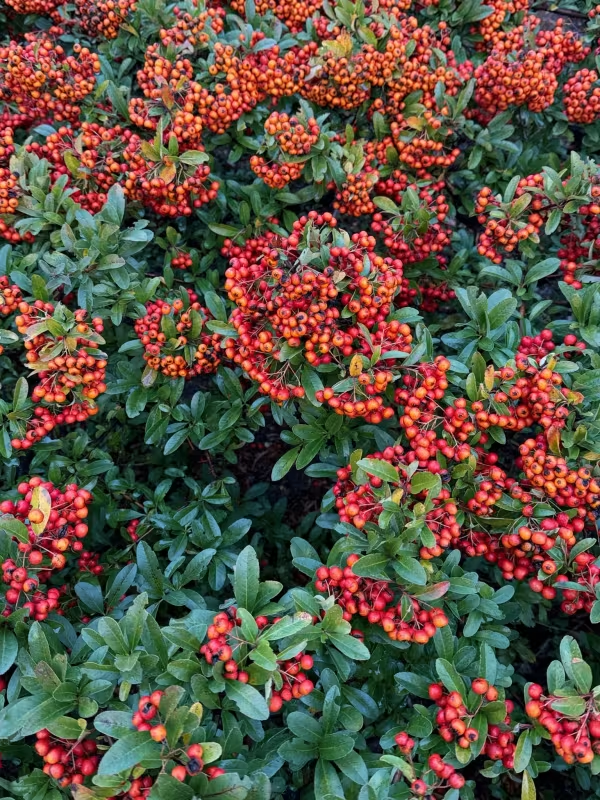
Scarlet firethorn (Pyracantha coccinea) is a robust, thorny, evergreen shrub belonging to the Rosaceae family. It is native to Southern Europe and the Caucasus region, known for its vivid orange-red berries that persist well into winter.
The plant thrives in Mediterranean-type climates, requiring full sun to partial shade for optimal berry production. While hardy, it performs best when planted against a wall or in a location protected from harsh winter winds.
Firethorn adapts to a wide range of soil types, provided there is excellent drainage. It is relatively drought-tolerant once established, but supplemental watering during extreme summer heat ensures more vigorous growth and richer foliage density.
Cultural practices focus on pruning, which is usually performed in late spring or summer. Because the plant responds well to shearing, it is widely utilized for creating dense defensive hedges, security screens, or ornamental topiary structures.
The ecological and ornamental value of Pyracantha coccinea is significant. It serves as a vital winter food source for birds and provides nesting cover within its thorny branches, making it a staple in wildlife-friendly garden design.
Main diseases and pests
Fire blight (Erwinia amylovora) is the most critical threat to firethorn. This bacterial infection causes leaves and stems to wither as if scorched, and rapid removal of infected branches is necessary to save the plant.
Scab disease is a common fungal issue that manifests as dark spots on leaves and fruits. Preventive care includes keeping the center of the shrub open to allow air circulation and applying fungicides during the early leaf-development stage.
Aphids and scale insects are the primary pests that infest young shoots. Their presence can be managed through biological controls or horticultural oils if the infestation is detected early in the growing season.
Root rot, specifically caused by Phytophthora, can occur in heavy, waterlogged soils. Ensuring that the planting site has sufficient drainage and avoiding over-irrigation are key to maintaining long-term plant health.
To ensure healthy growth, avoid excessive nitrogen fertilization, which produces succulent growth attractive to sucking insects. A balanced, slow-release fertilizer is generally preferred for established specimens.