
Pterocarpus angolensis
Pterocarpus angolensis DC.
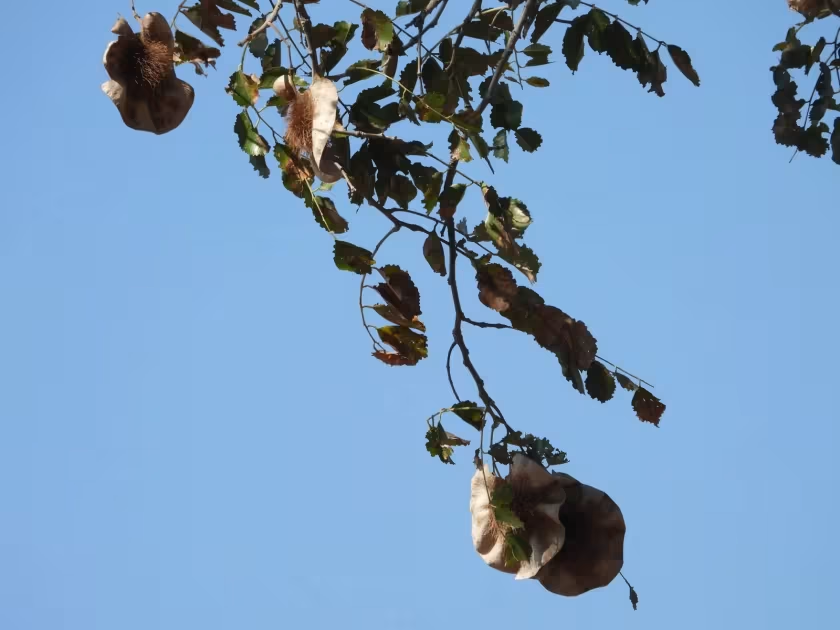
Description
Growing requirements
Pterocarpus angolensis, commonly known as Kiaat or Muninga, is a medium-sized leguminous tree within the Fabaceae family. It is native to tropical and subtropical regions of southern Africa, often found in open forests and wooded savannas.
The species thrives in well-drained, sandy soils that allow deep root development. It is highly adapted to areas with distinct wet and dry seasons, demonstrating resilience to seasonal water scarcity during its juvenile stages.
As a light-demanding species, Pterocarpus angolensis requires full sun to maximize its growth rate. Shaded environments inhibit its vertical development and often result in poor structural form, which decreases its timber value.
The tree establishes symbiotic relationships with soil bacteria, enabling nitrogen fixation. This biological trait significantly improves soil fertility in the immediate vicinity, making it a sustainable choice for agroforestry systems.
Cultivation requires careful site selection, avoiding areas prone to waterlogging. Given its naturally slow growth rate, intensive weed management during the first three to five years is essential for successful establishment.
Main diseases and pests
Stem-boring insects represent a major threat to Pterocarpus angolensis, as they create galleries in the wood that compromise both the tree's vitality and the quality of the timber for commercial use.
Fungal infections, particularly root and heart rot, are common in poorly managed plantations where soil drainage is inadequate. These diseases can spread rapidly, leading to the loss of entire plantation blocks.
Wildfires pose a consistent threat to young saplings, which have not yet developed the thick, fire-resistant bark characteristic of mature specimens. Effective firebreak management is crucial in conservation areas.
Over-harvesting remains the most critical threat to the species in the wild. Excessive logging to satisfy international demand for its durable, high-quality wood has severely depleted natural stands across its range.
Grazing pressure from both wild herbivores and domestic livestock can prevent natural regeneration by consuming seedlings. Exclusion fencing is frequently necessary in areas designated for reforestation.
Harvesting
The primary harvest objective is the high-value heartwood, which is prized for its stability, durability, and resistance to termites and rot. It is widely regarded as one of the finest timbers for furniture manufacturing.
In addition to timber, the tree produces a dark red, blood-like latex when the bark is damaged. Historically, this sap has been harvested for medicinal purposes and as a traditional dye for clothing and leather.
Sustainable harvesting practices emphasize long-term cycles, typically requiring trees to reach 50 to 60 years of age to achieve high-quality timber. Selective logging ensures the remaining stand continues to provide ecological benefits.
Market demand for Muninga timber is consistently high, driven by the furniture and musical instrument sectors. This economic potential provides an incentive for local communities to participate in reforestation efforts.
Waste biomass from harvest operations, such as branches and sawdust, is often utilized for local fuel production or charcoal, ensuring that nearly all parts of the tree are used efficiently.