
Psittacanthus cordatus
Psittacanthus cordatus
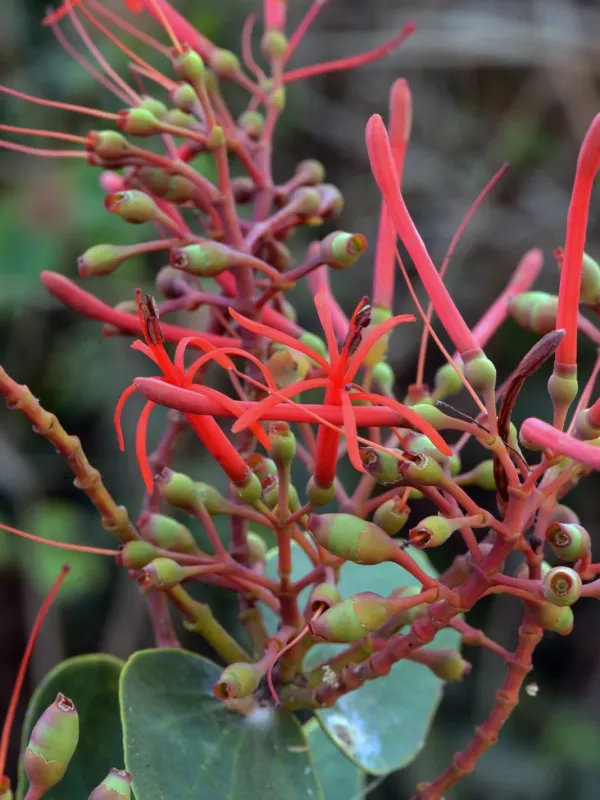
Description
Growing requirements
Psittacanthus cordatus is a species belonging to the Loranthaceae family. As a hemiparasite, it maintains a symbiotic yet parasitic relationship with its host trees, relying on them for water and nutrients while performing its own photosynthesis.
Native to South American tropical environments, this plant is specifically adapted to humid habitats. It thrives in locations where host trees provide the necessary light exposure for its development.
The botanical structure is marked by the presence of haustoria. These specialized invasive organs penetrate the host's bark and reach the xylem, creating a direct pathway for sap extraction.
The lifecycle depends heavily on avian dispersers. Birds consume the berries and, through their droppings, distribute the seeds onto tree branches, where the seeds germinate using a sticky mucilaginous substance.
In terms of agricultural impact, Psittacanthus cordatus is recognized as a pest. Severe infestations disrupt the physiological balance of the host tree, leading to decreased vigor, stunted fruit production, and potential branch death.
Main diseases and pests
Despite its parasitic nature, the plant faces threats from local insect populations and herbivorous fauna. These organisms can significantly defoliate the plant, restricting its spread.
Secondary infections, such as fungal pathogens, often take hold at the haustorial junction. This can cause necrotic lesions, which compromise the integrity of the branch tissue on the host tree.
Management remains a challenge in plantation agriculture. Mechanical pruning is the most effective approach to mitigate the damage and remove the invasive growths before they mature and flower.
Because the parasite is deeply embedded in the host's vascular system, chemical control is often impractical and risky for the host tree's survival, emphasizing the need for cultural control methods.
Successful management strategies focus on preventing the establishment of young seedlings. Regular orchard inspections are crucial for early detection and removal to maintain tree health and overall yields.