
Psittacanthus calyculatus
Psittacanthus calyculatus
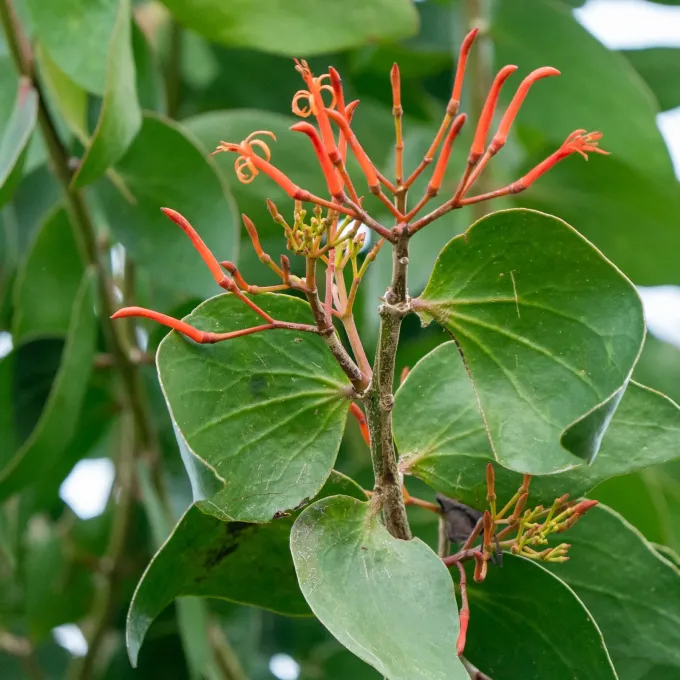
Description
Growing requirements
Psittacanthus calyculatus is a significant hemiparasitic shrub species belonging to the Loranthaceae family. Unlike conventional crops, it lives attached to the branches of host trees, where it taps into the xylem to extract water and essential mineral nutrients.
Its natural distribution is primarily found within Mexico and other parts of Central America. The species is highly adapted to tropical and subtropical ecosystems, flourishing in environments that support diverse tree canopies for colonization.
The botanical architecture of this plant is specialized for survival on elevated branches. It features resilient stems and persistent foliage that allows it to photosynthesize, while its primary metabolic reliance remains on the host's hydraulic system.
Climate requirements for the plant are intrinsically linked to the health of the host species. It prefers regions with stable annual temperatures and sufficient rainfall, which ensure the host tree remains active and capable of providing resources throughout the year.
In terms of agricultural and forestry impact, Psittacanthus calyculatus is generally considered a nuisance or a pest. It significantly competes with the host tree for nutrients, which can lead to reduced timber quality, lower fruit yields, and eventual decline of the host tree.
Main diseases and pests
The most effective management strategy involves manual removal of the parasitic clusters. This must be done by cutting away the affected branches with enough margin to eliminate the embedded haustoria to prevent regeneration.
Natural threats to the plant include various herbivorous insects and pathogenic fungi that can damage its stems or leaves. However, these natural controls are rarely sufficient to save a highly infested tree from severe damage.
Bird dispersal is the primary mechanism that allows this mistletoe to spread across orchards and forests. By consuming the fruits and depositing seeds in new areas, birds facilitate the colonization of previously healthy trees.
Sanitation practices are essential for maintaining orchard health. This includes regular inspections of the tree canopy, especially during the dormant season, to identify and remove early-stage infestations before they establish deep connections.
The lack of selective systemic herbicides for this parasite makes traditional integrated pest management (IPM) techniques, primarily mechanical and cultural control, the only reliable approach for protecting valuable host plantations.