
Five-finger
Pseudopanax arboreus
Description
Growing requirements
Pseudopanax arboreus, commonly known as Five-finger, belongs to the Araliaceae family. It is an evergreen small tree or shrub native to New Zealand, prized for its lush, palmate foliage and resilience.
The crop requires fertile, well-drained soil with a slightly acidic to neutral pH. It performs best in sheltered positions that receive plenty of light but are protected from harsh, direct sunlight in the hottest parts of the day.
Climate management is crucial, as this species prefers temperate, maritime-influenced conditions. While established plants are tolerant of mild frosts, young specimens must be protected during winter to prevent foliage damage.
Cultural practices include consistent irrigation during the establishment phase. Once fully rooted, the plant demonstrates moderate drought tolerance, although growth rates remain highest when soil moisture is maintained.
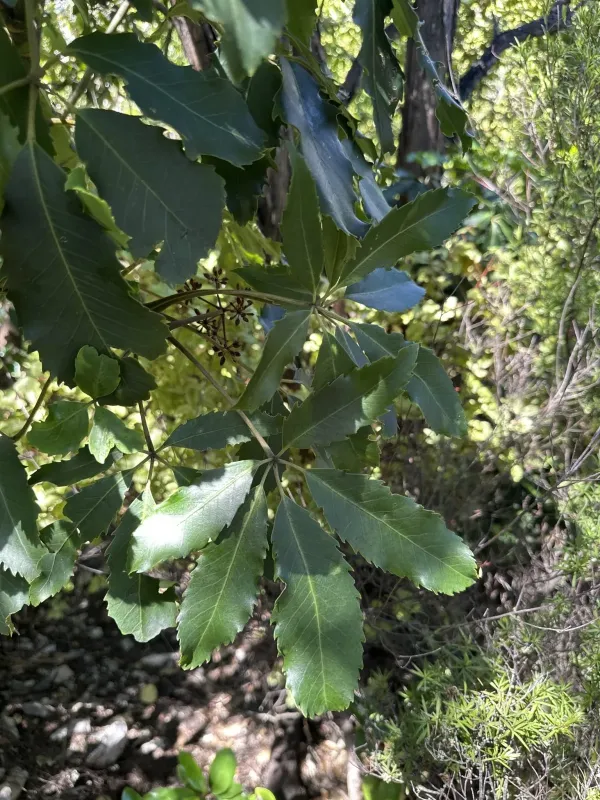
Botanically, the plant is noted for its distinctive leaves consisting of five to seven leaflets, hence the common name. In late autumn and winter, it produces large clusters of purple-black berries that are highly beneficial for local bird populations.
Main diseases and pests
The plant is relatively robust but can be susceptible to root rot diseases if grown in poorly drained, waterlogged soils. Ensuring excellent drainage is the primary defense against fungal pathogens.
Pest issues are generally minimal, although aphids or scale insects may occasionally infest new growth in sheltered, indoor conditions. Regular inspection and natural oil-based treatments are recommended.
In some regions, leaf spot fungi can occur during periods of high humidity and poor air circulation. Proper spacing during planting and thinning of branches are essential preventive measures.
Invasive weed competition during the early stages of growth can hinder the establishment of young trees. Mulching around the base suppresses weeds and retains soil moisture effectively.
While generally hardy, mechanical damage to the bark should be avoided, as it can act as an entry point for wood-boring insects or pathogens that could compromise the overall health of the specimen.