
White-flowered selfheal
Prunella laciniata L.
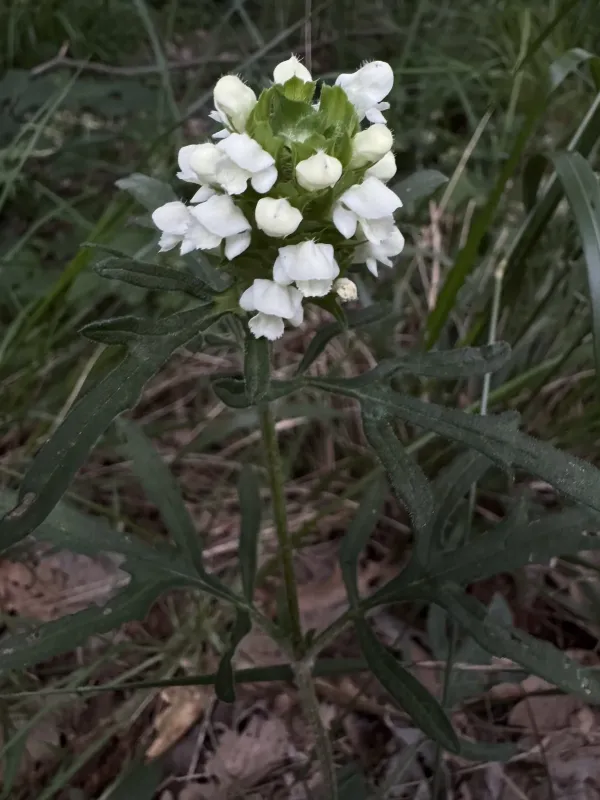
Description
Sowing dates
Prunella laciniata, commonly known as white-flowered selfheal, is a perennial herb belonging to the Lamiaceae family. Commercial cultivation typically begins with direct sowing in late autumn or early spring, often requiring seed stratification to ensure high germination rates across the planting site.
Due to the small size of the seeds, they should be surface-sown or covered with a very light layer of soil (not exceeding 1 cm). Adequate spacing between rows, usually 30-40 cm, is necessary to facilitate proper plant development and allow for mechanical weeding between rows.
Propagation can also be achieved by dividing established rhizomes in early spring. This method is often preferred in smaller operations to achieve faster establishment of the crop and more uniform growth across the production area.
Proper field preparation involves deep plowing followed by shallow harrowing to create a fine tilth. Removing perennial weeds before sowing is crucial, as the young seedlings of Prunella are not highly competitive in the initial growth phase.
Once seedlings emerge, they should be thinned to an appropriate density to prevent nutrient and light competition. Maintaining a consistent moisture level during the first few weeks is the key to ensuring uniform stand establishment.
Growing requirements
The plant thrives in full sun, which is essential for maximizing the concentration of active medicinal compounds within the leaves and flowers. While the species can tolerate partial shade, productivity is significantly reduced compared to full-sun environments.
The soil should be well-drained and neutral to slightly alkaline, reflecting the plant's native habitat on limestone soils. Soils with good calcium content promote healthier structural development and increase the plant's resistance to environmental stress.
Although relatively drought-tolerant once established, Prunella laciniata requires regular irrigation during the peak growing season to achieve high biomass. Ensuring consistent soil moisture during the budding stage prevents premature flower drop.
The species is winter-hardy and well-adapted to temperate climates, showing excellent survival rates during cold dormant periods. A period of vernalization is often beneficial for vigorous spring growth and subsequent flowering.
Fertilization should be managed based on soil tests, focusing on phosphorus and potassium levels to support root development and floral quality. Excessive nitrogen application is discouraged, as it promotes lush, succulent foliage that is more susceptible to disease.
Yield
Cultivation of Prunella laciniata is primarily targeted toward the production of high-quality herbal raw materials. An average yield of 1.5 to 2.2 tonnes of dried plant material per hectare can be achieved with optimal management practices.
As a notable nectar-producing plant, it serves as a valuable resource for apiaries, supporting local pollinators. Integrating this crop into pollinator-friendly farming systems can provide additional ecosystem services alongside the primary harvest.
The secondary market includes ornamental horticulture, where the plant is valued for its unique foliage and white floral display. Diversifying harvest uses can significantly improve the overall profitability of the farming business.
The pharmaceutical industry utilizes the extract of white-flowered selfheal for its range of bioactive properties. Maintaining consistent quality standards through good agricultural and collection practices (GACP) ensures a stable demand from buyers.
Long-term profitability is linked to the scale of production and the efficiency of the post-harvest drying process. Value-added processing, such as essential oil extraction, can further enhance the economic returns per unit of cultivated area.
Main diseases and pests
Powdery mildew is the most prevalent fungal disease in humid conditions, appearing as a white dusting on the foliage. Improving field aeration through proper plant spacing is the most effective cultural control method available to growers.
Root rot can occur in poorly drained soils where water stagnation is common. Installing field drainage systems and carefully managing irrigation schedules prevents these issues and protects the plant's vascular integrity.
Aphids can be a significant pest, particularly during the warm summer months, potentially causing leaf curling. Integrated Pest Management (IPM) strategies, including the use of biological controls, are recommended for medicinal herb crops.
Slugs and snails may damage young growth during the wet spring period. Physical barriers or organic molluscicides applied around the perimeter can effectively manage these populations without contaminating the herb produce.
Regular monitoring of the fields for early signs of disease and insect damage is necessary to prevent outbreaks. Removing crop residues after the final harvest helps break the cycle of pathogens and pests for the following season.
Harvesting
Harvesting is conducted during the peak flowering stage to ensure the highest levels of active ingredients. Timing is critical, and the harvest must be completed on a dry, clear day once the morning dew has completely evaporated.
The upper portions of the stems are cut cleanly to encourage regrowth and prevent damage to the rhizome system. Using sterile, sharp equipment ensures that the cut site heals quickly and reduces the risk of post-harvest infection.
Immediate drying is essential to maintain product quality. The harvested material is transported to a shaded, well-ventilated drying shed and spread in thin layers to facilitate moisture removal without overheating.
Drying is completed at temperatures below 40°C in a controlled environment. This prevents the loss of volatile essential oils and maintains the color and potency of the herb, ensuring it meets industrial standards.
Once dried to the correct moisture level, the material is packaged in light-proof and moisture-proof containers. Proper storage in a cool, dark environment ensures the medicinal efficacy of the product for up to two years.