
Protea scolymocephala
Protea scolymocephala
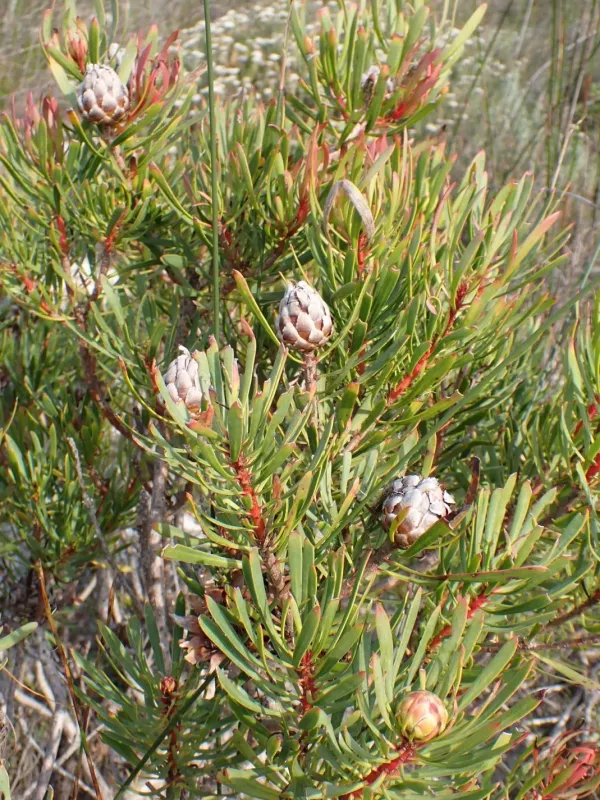
Description
Sowing dates
Sowing seeds of Protea scolymocephala is best performed in autumn or early spring when temperature conditions are optimal for germination.
To successfully stratify seeds, growers often use smoke treatments or specialized chemicals that simulate the environmental conditions of wildfires characteristic of fynbos ecosystems.
The seeding substrate must be extremely low in nutrients, maintain an acidic pH (around 5.0–5.5), and possess excellent drainage properties.
Germination is often uneven, so it is crucial to maintain consistent moisture in the substrate without risking waterlogging the sensitive roots.
Seedling transplanting must be handled with extreme care, as the root system of the protea is highly susceptible to mechanical damage and disturbance.
Growing requirements
Protea scolymocephala belongs to the Proteaceae family and is native to the Western Cape province of South Africa.
The plant thrives in sunny locations with high natural light intensity and does not tolerate shading, which leads to weak and leggy growth.
The optimal temperature range for vegetation is between +15°C and +25°C, and the plant cannot withstand freezing temperatures.
Ensuring high soil aeration is critical; in heavy or clay-like soils, the plant will quickly succumb to root rot diseases.
The crop requires specialized irrigation: water should be soft with low lime and mineral content, as proteas are highly sensitive to excess phosphorus levels.
Yield
Protea scolymocephala is primarily valued not as a mass-produced agricultural crop, but as a specialized product for the premium cut-flower market.
The shrub typically begins to flower in its second or third year, with the number of floral stems depending on pruning intensity and canopy management.
Industrial yield is determined by the plant's ability to branch; proper agricultural practices allow for harvesting 10–15 commercial stems per adult plant.
The productive lifespan of the plant on a plantation can reach 8–10 years, provided strict moisture and drainage protocols are followed.
The economic viability of cultivation depends on the quality of the cut stems, vase life, and demand at international exotic flower auctions.
Main diseases and pests
The main threats to Protea scolymocephala include fungal diseases that flourish in conditions of stagnant air and excessive soil moisture.
Phytophthora root rot is the most aggressive pathogen, often infecting the root crown and becoming nearly impossible to treat at later stages.
Pests such as mealybugs and spider mites can cause significant damage to young shoots, especially in greenhouse-grown environments.
Excessive mineral fertilizer application, especially phosphorus-based products, causes toxicity and makes the plant highly susceptible to secondary infections.
Disease prevention consists of strictly controlled irrigation, active ventilation, and the use of sterile substrates during propagation.
Harvesting
Harvesting of the inflorescences should be conducted in the early morning hours when the plant is fully turgid, which extends the vase life.
It is important to select floral stems where the flowers are in the "full bloom" stage or slightly closed to facilitate safer transport.
After harvesting, stems should be immediately placed in clean water supplemented with professional floral preservatives to prevent bacterial growth.
Transportation is carried out in refrigerated trucks at temperatures of +4°C to +6°C to effectively slow down metabolic processes.
Removing the lower leaves from the stem is mandatory to prevent them from rotting in the water, which would spoil the appearance of the entire batch.