
Protea lacticolor
Protea lacticolor
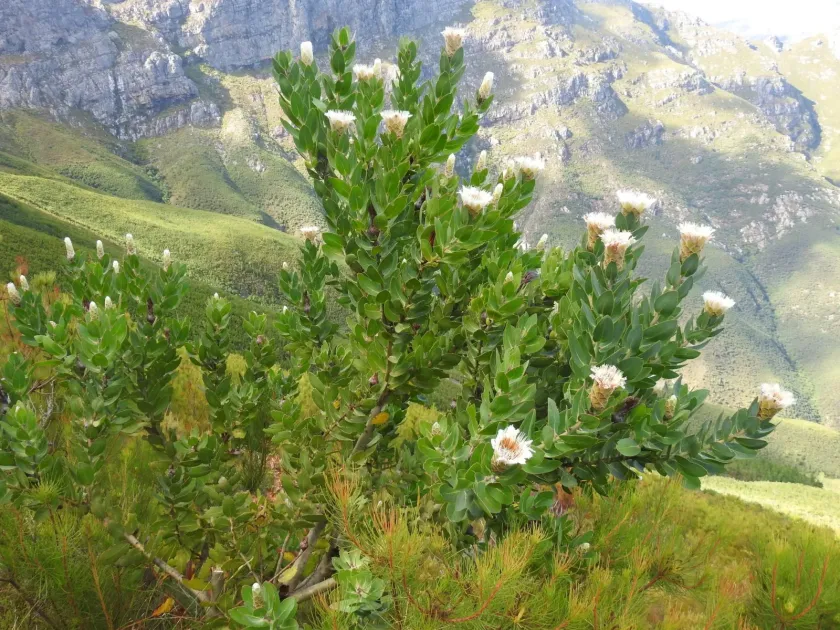
Description
Growing requirements
Protea lacticolor is an evergreen shrub belonging to the Proteaceae family, native to the mountainous regions of South Africa. It is a highly specialized plant adapted to nutrient-poor soils and specific microclimates typical of its natural habitat.
The cultivation of this species requires Mediterranean-like conditions with mild, frost-free winters. Successful production relies heavily on high light intensity and excellent air circulation, which prevents the development of fungal pathogens and ensures proper growth.
Soil management is the most critical aspect of protea agrotechnics. The substrate must be highly permeable, acidic, and extremely low in phosphorus, as the plant's proteoid roots are evolved to absorb nutrients from very infertile environments.
Watering regimes should be meticulously controlled to ensure that the root zone never becomes waterlogged. Drip irrigation or careful container management is often employed to maintain consistent moisture levels without creating anaerobic conditions.
Commercially, Protea lacticolor is primarily grown for the cut flower market. Its unique appearance and long post-harvest vase life make it a premium product for floral decorators and exporters who serve global markets.
Main diseases and pests
The most significant threat to Protea lacticolor is Phytophthora cinnamomi, a soil-borne pathogen that causes lethal root rot. Once infected, plants show rapid wilting and collapse, with no effective cure currently available.
Pests such as mealybugs, scales, and mites can significantly reduce the quality of the foliage and bracts, especially in greenhouse environments where natural predators are absent. Integrated pest management is essential for large-scale production.
Nutrient toxicity, particularly from phosphorus-rich fertilizers, often manifests as rapid leaf burn and chlorosis. Growers must avoid using standard horticultural fertilizers, opting instead for specialized low-phosphorus formulations.
Gray mold (Botrytis) represents a major risk during periods of high humidity. It attacks the bracts and flower heads, rendering the crop unsuitable for sale. Improving canopy airflow is the most effective preventative measure against this mold.
Successful management requires strict hygiene protocols, including cleaning tools and ensuring that propagation material is disease-free. Regular scouting for early symptoms of stress or infestation is mandatory for commercial sustainability.