
Smith's Fairy Bells
Prosartes smithii
Description
Growing requirements
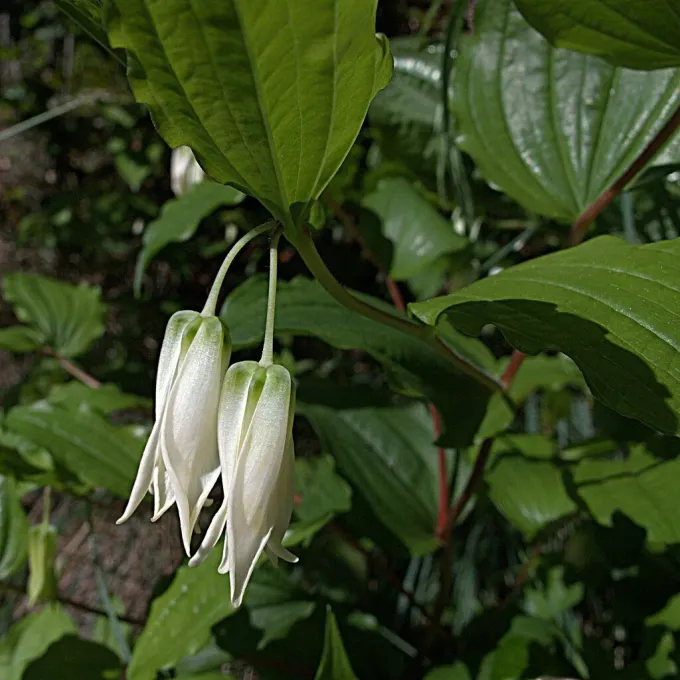
Smith's Fairy Bells (Prosartes smithii) is a herbaceous perennial plant belonging to the Melanthiaceae family. It is a woodland species primarily found in the moist, forested regions along the Pacific Coast of North America.
The plant thrives in temperate climates characterized by cool, humid conditions and protected, shaded sites. It is evolutionarily adapted to forest floors where organic litter creates a nutrient-rich, moisture-retentive substrate.
Optimal growth requires well-draining, slightly acidic soil rich in organic matter. Gardeners should mimic its natural environment by providing shade, which prevents the soil from drying out excessively and maintains cool root temperatures.
Agrotechnical maintenance focuses on consistent irrigation. While the plant requires constant moisture, standing water must be avoided to prevent root rot. Mulching with leaf mold or compost is highly recommended to sustain soil health.
In terms of хозяйственного (utilitarian) use, it is a highly prized decorative plant in shade gardens. Its drooping, bell-shaped flowers and subsequent berries make it a favorite choice for ornamental woodland landscape designs.
Main diseases and pests
Slugs and snails are the primary pests that pose a threat to the foliage. Gardeners should employ integrated pest management strategies to protect the plants, especially during damp spring months.
Root rot is the most common pathology associated with improper moisture management. If the site has heavy clay soil, the installation of a drainage system or the amendment of soil structure is critical.
Fungal infections can occur if the plant is grown in areas with poor air circulation or high humidity coupled with stagnant water. Thinning out foliage or ensuring adequate spacing can mitigate these risks.
Environmental stress, such as extreme heat or prolonged drought, can lead to leaf scorch. Providing a sheltered location is essential for maintaining the overall vigor and aesthetic appeal of the plant.
While the plant is generally hardy, regular monitoring for pests and diseases is essential for maintaining long-term health. Cleanliness of the growing area helps in preventing the buildup of spores and larvae.