
Hooker's fairy bell
Prosartes hookeri
Description
Growing requirements
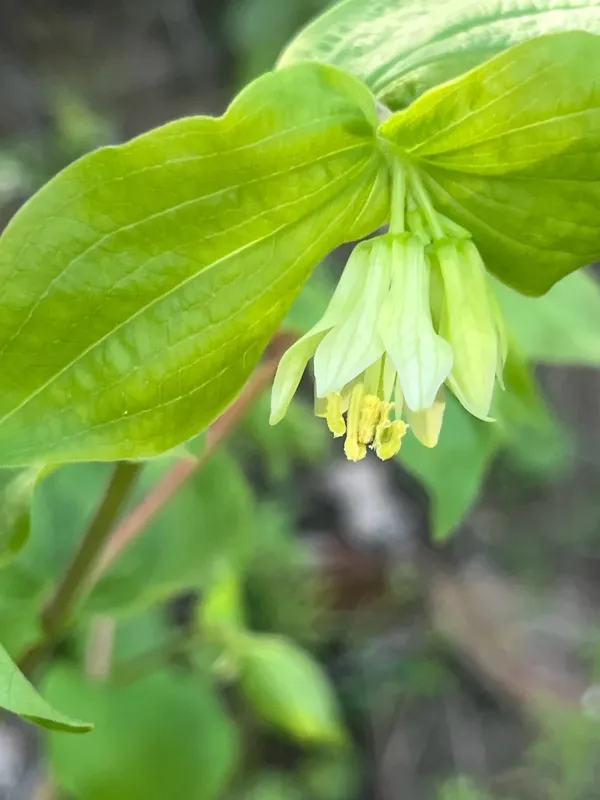
Hooker's fairy bell (Prosartes hookeri) is a perennial herbaceous plant belonging to the Melanthiaceae family. Native to the forested regions of Western North America, it is adapted to cool, moist environments typical of woodland understories.
Botanically, it is characterized by its branching stems that reach heights of up to 70 centimeters. The leaves are broad and alternate, while the small, bell-shaped flowers are typically cream or greenish, often followed by distinct orange or red berries that attract wildlife.
The plant thrives in partial to full shade, avoiding direct sunlight which can scorch its delicate foliage. It prefers a location that mimics a woodland floor, with cool temperatures and protection from harsh, drying winds.
Soil requirements are quite specific: the medium must be rich in organic matter, such as leaf mold or compost, and maintain consistent moisture. Good drainage is essential, as the rhizomes are prone to rot in waterlogged conditions.
In landscaping, it is used as an ornamental woodland plant, perfectly suited for rock gardens, shaded borders, or naturalistic wild-garden settings where it provides seasonal interest with its elegant flowers and decorative fruit.
Main diseases and pests
The primary threat to the health of Hooker's fairy bell comes from slugs and snails, which can cause significant damage to the foliage during moist spring weather. Manual removal or baiting is often necessary to protect the plant's aesthetic value.
Root rot is the most common disease encountered, typically occurring due to poor drainage or overly compacted soil. To prevent this, growers should ensure a porous soil structure that allows excess moisture to dissipate quickly.
Aphids can occasionally cluster on the growing tips, particularly during periods of environmental stress. While usually not fatal, heavy infestations can weaken the plant and reduce its vigor, necessitating timely horticultural soap applications.
Leaf spot infections may occur if air circulation is insufficient, leading to prolonged dampness on the leaves. Providing adequate space between plants and avoiding overhead watering helps to maintain a dry leaf surface and prevent fungal spread.
Maintaining a clean growing area by removing decaying organic matter around the base of the plant significantly reduces the risk of overwintering pathogens. Consistent monitoring and proper hygiene are key to long-term success with this species.