
Portulacaria pygmaea
Portulacaria pygmaea
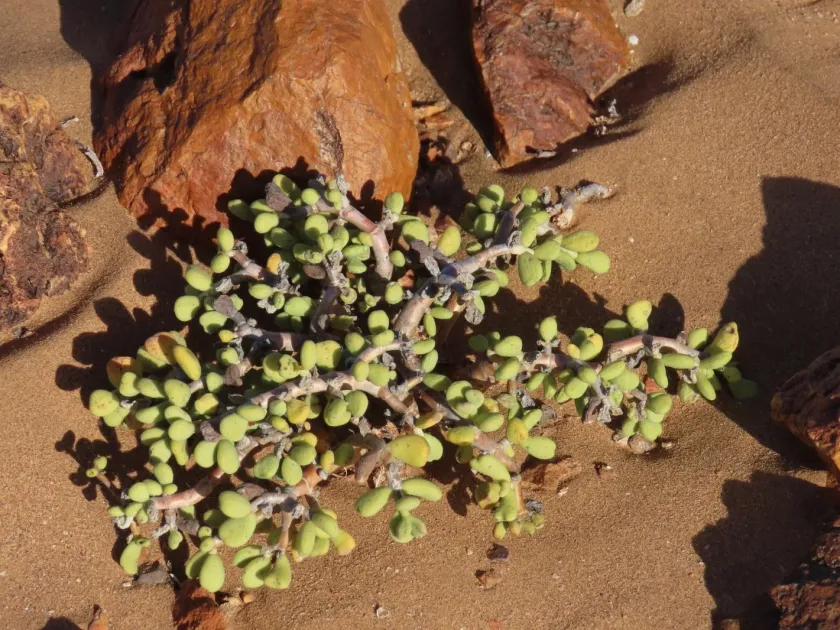
Description
Growing requirements
Portulacaria pygmaea is a fascinating dwarf succulent belonging to the Didiereaceae family. It is a slow-growing, highly drought-tolerant shrub that demonstrates exceptional physiological adaptation to extreme arid environments.
Originating from the arid regions of Namibia and parts of South Africa, this plant thrives in rocky, mineral-rich substrates. It has evolved to survive in environments where rainfall is scarce and highly irregular.
Cultivation requires abundant direct sunlight to maintain the plant's characteristic dense and compact structure. Inadequate light levels can lead to etiolation, which significantly weakens the structural integrity of the plant.
The soil requirements are strict: the substrate must have excellent drainage capacity. It is recommended to use a mix composed of grit, coarse sand, and a small percentage of organic material to ensure that roots remain oxygenated.
Watering management is the most critical aspect of agrotechnology for this species. Water should be applied only during the active growing season, and only when the soil has completely dried out, avoiding any moisture accumulation around the base.
Main diseases and pests
The primary health risk for Portulacaria pygmaea is root rot, typically caused by waterlogging of the substrate. This issue is usually exacerbated by low ambient temperatures combined with high soil moisture.
Mealybugs are the most common pests, often hiding in the dense foliage. These insects drain sap from the plant, causing stunted growth and potentially introducing viral or fungal diseases through feeding punctures.
Spider mites can also become problematic in conditions of low humidity and poor ventilation. Their presence is indicated by fine webbing and discoloration of the leaf surfaces, requiring immediate acaricide application.
Preventive measures include maintaining good airflow and ensuring that the plant is not overcrowded. Proper sanitation and regular inspection of the lower leaf clusters are essential for early pest detection.
If rot is detected, it is necessary to prune the affected area back to healthy, firm tissue. The cut must be allowed to callus properly in a dry, shaded place before any attempt is made to re-root the cutting.