
Portulacaria namaquensis
Portulacaria namaquensis
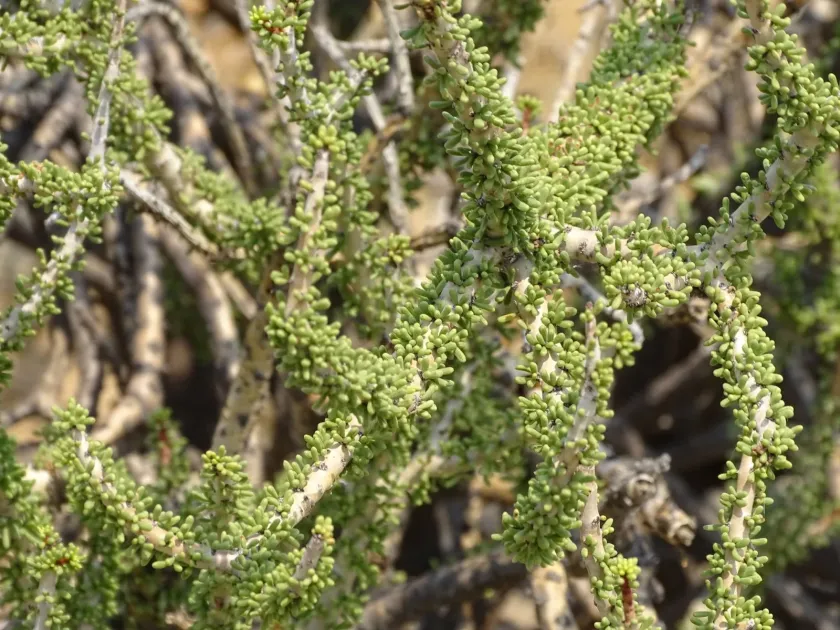
Description
Growing requirements
Portulacaria namaquensis is a distinct succulent species belonging to the Didiereaceae family. Originating from the arid landscapes of the Namaqualand region in Namibia and South Africa, it is a highly specialized xerophyte adapted to extreme environments.
Botanically, it is characterized by its woody, spiny stems and small, fleshy leaves that store water efficiently. Unlike its relative, the common Elephant Bush, this species is noted for its slower growth rate and unique structural morphology.
The climate requirements for this plant demand high solar radiation and low relative humidity. It thrives in locations where it can receive direct sunlight for several hours, ensuring the plant maintains its structural integrity and compact growth habit.
Regarding soil, the species requires an exceptionally porous and well-draining substrate. Growers typically utilize a mix of volcanic rock, coarse sand, and a small percentage of organic material to simulate its native rocky habitat.
Cultural practices involve a strict watering regimen based on the dry-down cycle. During the active growing season, irrigation should be thorough but infrequent, while during the winter dormancy period, the plant requires almost no water at all.
Main diseases and pests
The primary threat to the health of Portulacaria namaquensis is root rot, which occurs when irrigation exceeds the plant's metabolic capacity or when drainage is insufficient. Constant moisture in the root zone is fatal for this species.
Mealybugs pose a significant challenge because they colonize the protected areas between the spines and stems. Regular inspection and the application of horticultural soaps or systemic insecticides are required to manage these infestations.
Spider mites are common in indoor settings where air circulation is restricted. They cause significant damage to the leaf epidermis, which can lead to long-term dehydration and structural weakness of the branches.
Fungal infections can develop in high-humidity conditions without proper ventilation. These pathogens often attack the collar area of the plant, causing tissue necrosis and eventual collapse if not treated with appropriate fungicides.
Improper temperature management, specifically exposing the plant to freezing temperatures while the root ball is damp, can cause immediate cell wall rupture and tissue death, leading to secondary bacterial rotting.