
Portulacaria fruticulosa
Portulacaria fruticulosa
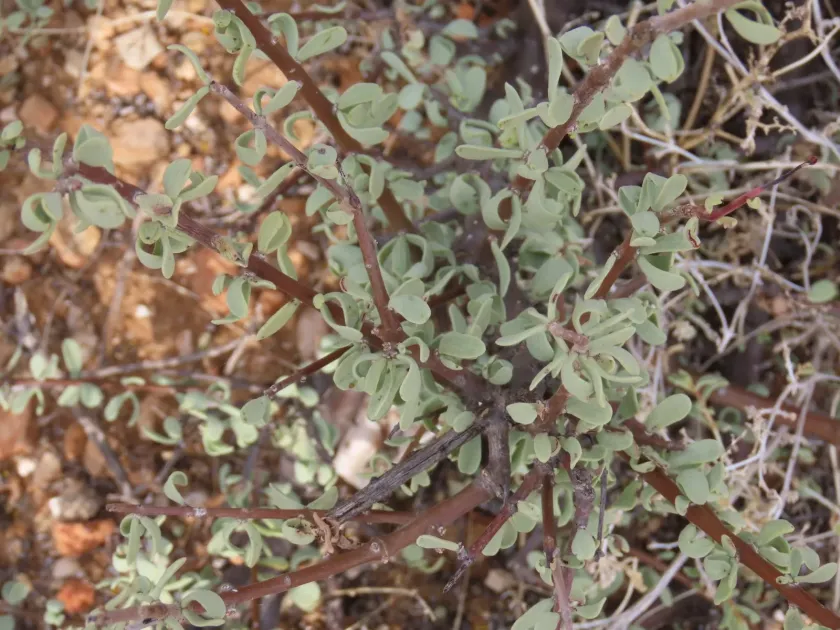
Description
Growing requirements
Portulacaria fruticulosa is a perennial succulent shrub belonging to the Didiereaceae family. Originating from the arid regions of Southern Africa, this plant has evolved to thrive in environments with sparse rainfall and intense solar radiation.
The culture requires high levels of solar exposure to maintain its structural integrity. Adequate sunlight prevents the stems from becoming leggy and ensures the density of the foliage, which is characteristic of healthy, wild-type specimens.
Soil conditions are critical for the longevity of the plant. It demands a highly porous, well-draining substrate typically consisting of inorganic matter like sand, pumice, or gravel to prevent the roots from remaining in a perpetually saturated state.
Climate requirements include warm temperatures year-round. As a succulent species, it is highly sensitive to frost and freezing conditions, necessitating relocation to climate-controlled environments or greenhouses during cold seasons in non-tropical zones.
Agronomic management relies on a cycle of watering that mimics the seasonal rains of its native habitat. During the active growth period, it requires moderate watering, while it must be kept almost completely dry during dormancy to prevent physiological stress.
Main diseases and pests
The primary threats to Portulacaria fruticulosa are biotic stressors, specifically mealybugs and spider mites, which exploit the succulent tissues for hydration and nutrients during periods of high indoor temperatures.
Mealybugs are particularly difficult to manage due to their waxy coating, which provides a natural shield against contact pesticides. Early detection and mechanical removal are often necessary to prevent significant infestation of the stems.
Root rot is the most common abiotic threat, occurring when the irrigation frequency is not properly adjusted to the metabolic rate of the plant. Once rot sets in, the xylem and phloem can be severely damaged, often leading to total plant collapse.
Environmental management, including increased airflow and the avoidance of high humidity levels, significantly reduces the likelihood of fungal outbreaks that can compromise the health of the succulent shrub.
For chemical control of pests, systemic insecticides are preferred. By being absorbed into the plant's sap, these substances provide a continuous defense against sap-sucking insects that are common in greenhouse or decorative plant production.