
Polygala tenuifolia
Polygala tenuifolia Willd.
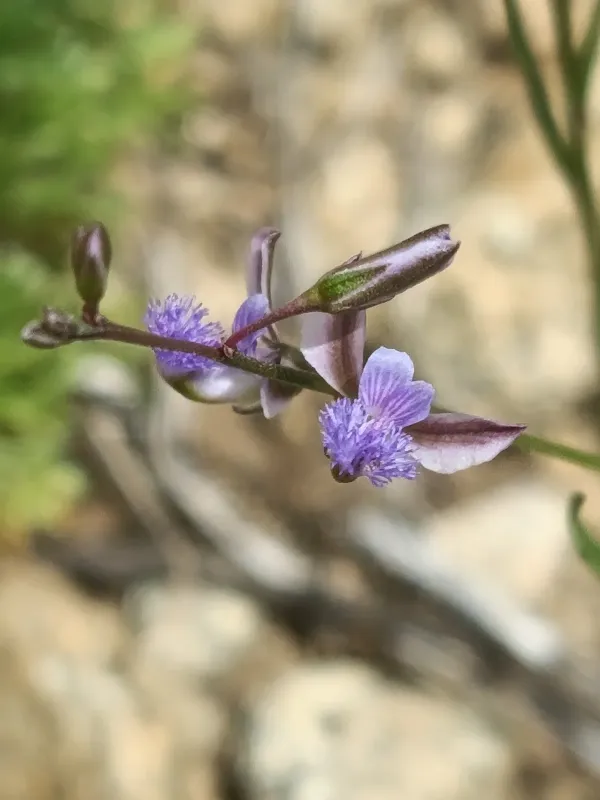
Description
Sowing dates
Polygala tenuifolia, commonly known as thinleaf milkwort, is a perennial herbaceous plant belonging to the Polygalaceae family. It is native to the temperate regions of East Asia, thriving in well-drained, rocky habitats.
Sowing should take place early in the spring or late autumn. Seeds possess dormancy, often requiring a period of cold stratification or pre-treatment to ensure a uniform germination process in the field.
Seeds are small and should be sown at a shallow depth of approximately 1 centimeter. Proper soil moisture must be maintained during the initial establishment phase, as the seedlings are quite fragile.
The plant demonstrates slow growth during the first year of life. Maintaining adequate row spacing, typically between 45 to 60 centimeters, is crucial to minimize competition for space and sunlight.
Effective seedbed preparation is vital. The soil should be finely crumbled to ensure maximum contact between the seeds and the soil surface, facilitating consistent water absorption.
Growing requirements
This crop prefers full sun exposure. It is highly adapted to sunny environments, and shading can significantly reduce the concentration of active pharmaceutical compounds within the root system.
Ideal soil types for thinleaf milkwort are sandy or loamy soils with excellent drainage. The plant cannot tolerate waterlogged conditions, which lead to root decay and decreased yields.
The plant is relatively drought-tolerant once established. However, during the seedling phase, supplemental irrigation may be necessary to support the development of a healthy root system.
Fertilizer application should be balanced. Excessive nitrogen content can promote lush vegetative growth while simultaneously inhibiting the metabolic processes required for saponin synthesis.
Good soil aeration is mandatory. Regularly hoeing the soil between rows prevents crusting and ensures that oxygen reaches the developing taproots, which are the primary part of the harvest.
Yield
The main commercial value of Polygala tenuifolia lies in its roots, which are widely utilized in traditional medicine and modern pharmacology for their expectorant properties.
The maturation cycle typically spans three years. Harvesting prematurely usually results in lower yields and a lesser concentration of active constituents, decreasing the quality of the raw material.
The root structure of this plant is relatively thin but deep. Yield potential is influenced by the soil depth, as deeper, uncompacted soil profiles allow for better root elongation and mass gain.
Sustainable cultivation requires crop rotation to maintain soil health. Planting in the same field repeatedly can lead to the build-up of soil-borne pathogens specific to the Polygalaceae family.
Optimized yields are achieved through consistent weed management and careful soil preparation, ensuring the plant allocates its energy primarily to its roots.
Main diseases and pests
Weed interference is the primary threat to young plantations. Because thinleaf milkwort develops slowly initially, weeds can easily outcompete the crop for sunlight and nutrients.
Root rot, primarily caused by fungal pathogens such as Pythium or Fusarium, is a significant risk in poorly drained or overly acidic soils, requiring strict water management.
Pests such as aphids or soil-dwelling larvae can occasionally damage the leaves or roots, though they rarely reach epidemic levels in well-maintained field conditions.
Integrated Pest Management (IPM) is encouraged. Because the crop is for pharmaceutical use, limiting synthetic pesticide application is necessary to meet the high standards for purity.
Preventative measures include sourcing high-quality, disease-free seeds and ensuring proper spacing to encourage airflow, which helps mitigate the risk of foliar fungal diseases.
Harvesting
Harvesting usually occurs in the autumn of the third year. This period is selected because the plant enters a dormant state, causing nutrient translocation toward the roots.
Mechanical harvesting equipment must be adjusted to reach the appropriate depth, ensuring the entire root system is extracted without unnecessary breakage or damage.
Post-harvest handling is critical. The roots must be cleaned thoroughly to remove all soil residues, as impurities can drastically decrease the value of the processed product.
Drying must be conducted in controlled environments at temperatures not exceeding 60 degrees Celsius. This prevents the degradation of delicate bioactive compounds found in the root bark.
Once dried, the product should be stored in cool, dry, and well-ventilated conditions to prevent moisture regain and microbial growth, preserving its medicinal potency over time.