
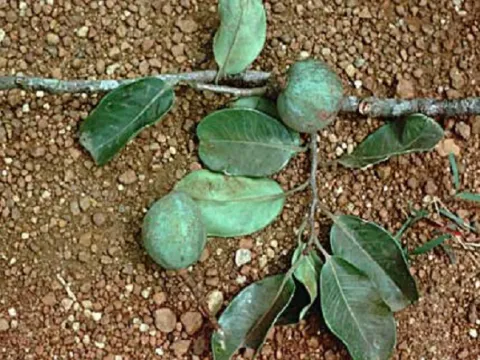
Poga
Poga
Propagation of the Poga oleosa plant is primarily carried out through seeds, which require high humidity and stable temperatures for successful germination. In their natural habitat, the seeds are dispersed by animals, but under cultivation, pre-treatment or soaking is often necessary.
What the section contains

Poga
Seedlings are planted at the beginning of the rainy season to ensure the young plant has sufficient moisture during the establishment period. Planting density depends on the purpose of use; for fruit production, the distance between trees should be at least 8-10 meters.
The crop is extremely sensitive to soil drying during the initial stages of development, so agronomists recommend mulching the base of the trees. During the first two years of life, seedlings need protection from direct sunlight, simulating the conditions of the lower canopy in a tropical forest.
Soil preparation includes the application of organic fertilizers, as the plant prefers nutrient-rich substrates with high humus content. The root system requires good drainage, necessitating the creation of raised mounds in heavy clay soils.
Optimal timing for planting is aligned with periods of maximum rainfall to minimize the need for supplemental irrigation. In industrial nurseries, seeds are sown in containers with sterile substrate until the seedlings reach a height of 30-40 centimeters.
Poga oleosa is a member of the Rhizophoraceae family, evolutionarily adapted to the conditions of the equatorial rainforests of West and Central Africa. The plant requires a tropical climate without significant seasonal temperature fluctuations.
The minimum temperature for normal vegetation is 20 degrees Celsius, and when it drops to 15 degrees, the plant slows down its metabolic processes. The optimal humidity level is 80-90 percent with annual rainfall of at least 2000 millimeters.
Soil requirements include high acidity or neutral pH, with a critical need for a thick layer of forest litter. The plant does not tolerate soil compaction well and requires good root aeration, which limits potential cultivation areas.
In its natural range, the tree reaches a height of up to 20 meters, with an upright trunk and a dense canopy that creates a solid shade. The leaves have a leathery texture, allowing the plant to effectively transpire moisture in high-humidity tropical conditions.
For stable fruiting, Poga oleosa requires the presence of specific insect pollinators native to African forests. In introduction scenarios, the lack of natural pollinators often becomes a major obstacle to obtaining a commercial yield.
The primary product is the oilseed, which possesses high nutritional value and a specific fatty acid content. The fruits resemble capsules containing seeds rich in edible oils and proteins.
The yield of wild trees is difficult to forecast, but with intensive care, one mature tree can produce up to 5-10 kilograms of shelled seeds per year. Harvesting is a labor-intensive process due to the height of the trees and asynchronous ripening of the fruits.
The oil extracted from Poga seeds is highly valued in local African cuisine and is also used as technical raw material. It has a pleasant nutty aroma and good storage stability if humidity conditions are managed correctly.
Beyond its oil properties, the wood of this plant finds application in construction and artisan production. Although the crop is more often considered a forest resource, its potential for agroforestry is actively being explored by experts.
Economic viability of cultivation is currently limited by the lack of improved varieties with shorter lifecycles. Current production volumes rely mainly on the collection of wild fruits by local communities in forested zones.
The main danger to plantations is posed by various types of fungal diseases that develop under high humidity. Root rot infections can lead to the death of the tree within a single growing season.
Among the pests, tropical wood-boring insects are significant, as they damage the trunk wood and weaken the plant's overall health. Regular inspections for holes in the bark and characteristic exudates are mandatory control measures.
Leaf-eating pests, including tropical butterfly caterpillars, can significantly reduce the photosynthetic surface area. In plantation conditions, an integrated pest management system including biological agents is recommended.
Epiphytic plants and lianas can quickly wrap around the trunk of a young Poga tree, suppressing its growth and depriving it of necessary sunlight. Regular cleaning of trunks and the surrounding area prevents such threats.
Disruption of the soil balance or water stagnation inevitably provokes the development of mold fungi on fruits even before they ripen. Agronomists recommend maintaining proper planting density to ensure free air circulation between tree canopies.
Fruit harvesting is carried out by hand at the moment of biological maturity, when the fruit shell begins to crack. It is crucial to prevent the seeds from falling onto the ground, as this leads to rapid rotting in tropical forest floor conditions.
Primary processing after harvesting consists of extracting the seeds and immediately drying them under cover. Sun-drying allows for a reduction in moisture content to levels safe for long-term storage, preventing mold growth.
After drying, the seeds are cleaned of pericarp residues and sorted by size. To obtain high-quality oil, the seeds undergo cold pressing, which helps preserve beneficial micronutrients and vitamins.
Storing the harvest requires well-ventilated warehouse facilities protected from pests, especially rodents. Packaging in burlap allows for natural air exchange, which is necessary to prevent spoilage.
Logistics of harvesting are complicated by the remote location of the trees relative to transport hubs, requiring the organization of primary processing points directly in the areas where the crop grows.