
Purple viper-grass
Podospermum purpureum
Description
Growing requirements
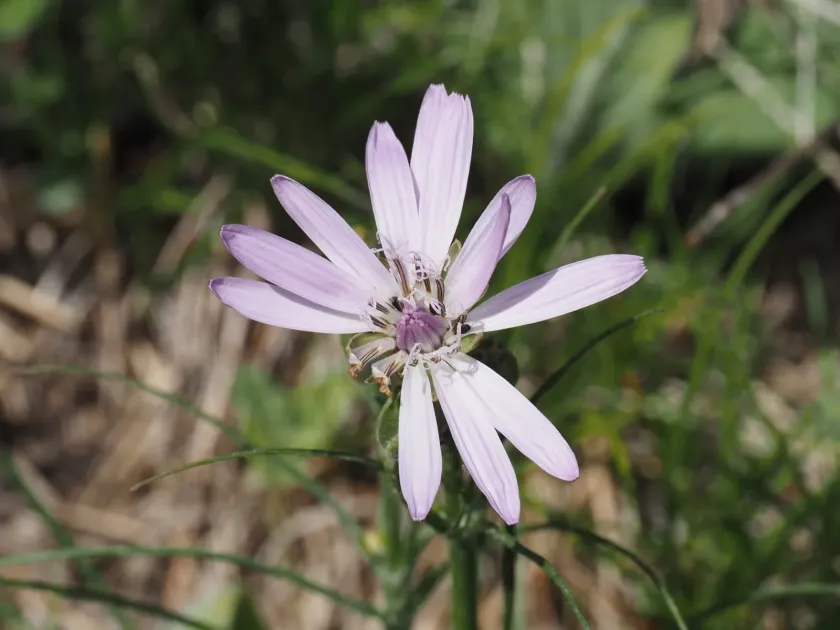
Purple viper-grass (Podospermum purpureum) is a herbaceous perennial belonging to the Asteraceae family. It is recognized for its significant resilience and ability to thrive in harsh, dry environments typical of the Eurasian steppe regions.
The plant originates from Central and Southeastern Europe and parts of Asia. It is naturally adapted to dry, stony slopes and nutrient-poor meadows, making it an excellent candidate for marginal land restoration and forage enrichment.
Botanically, it features a robust taproot system that facilitates deep water uptake, which is a key trait for its drought tolerance. The leaves are pinnately divided, and the purple flowering heads typically bloom from late spring to summer.
For cultivation, the plant requires well-drained soils with good aeration. It thrives in neutral to slightly alkaline pH environments and demands full sun exposure, as it does not compete well with larger, shade-casting vegetation.
The agricultural potential of this crop lies in its role as high-quality forage. Livestock, particularly sheep and goats, readily consume it, and its hardy nature ensures steady productivity in arid conditions where traditional forage fails.
Main diseases and pests
The primary threats to Podospermum purpureum crops include fungal infections such as root rot. This occurs predominantly in waterlogged or poorly drained soils, which can lead to rapid plant mortality in the early establishment phase.
Common pests include aphids and larvae of various coleoptera. These insects can cause significant damage to the photosynthetic area, thereby reducing the plant's capacity to accumulate biomass during the growing season.
Powdery mildew represents another major risk, especially in years characterized by high humidity and temperature fluctuations. Effective management involves regular field monitoring and the use of preventative cultural practices.
Weed competition is particularly intense during the first year of establishment. Because the plant has slow initial growth, mechanical weeding or the use of precise row management is essential to prevent weed overgrowth.
Soil-borne pathogens like Fusarium are frequently identified in fields with improper rotation. Maintaining a diverse crop cycle and avoiding excessive use of nitrogen fertilizers helps mitigate these biological threats.