
Podospermum canum
Podospermum canum
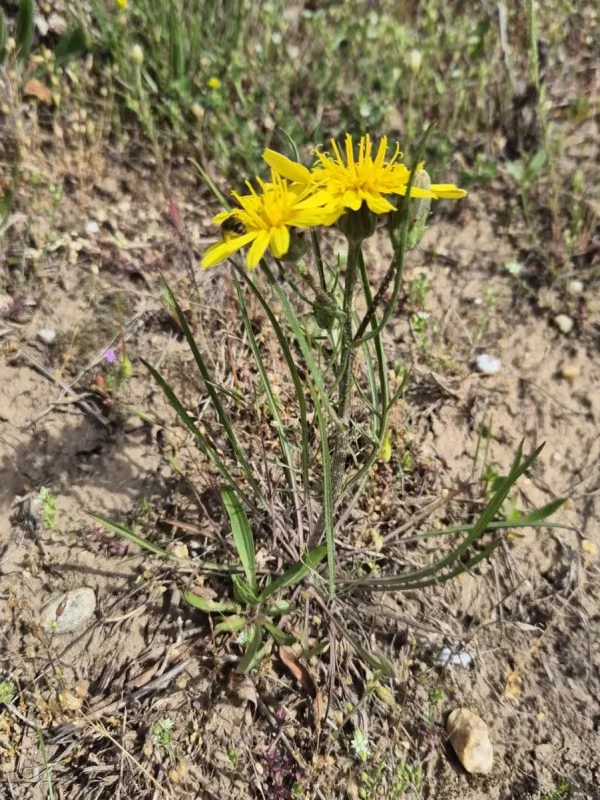
Description
Growing requirements
Podospermum canum is a distinctive herbaceous plant belonging to the Asteraceae family. It is primarily recognized for its ability to thrive in challenging environments where other vegetation often fails to establish.
Originating from the steppe regions of Eurasia, this species is naturally adapted to saline soils and semi-arid conditions. Its distribution is closely linked to its nature as a facultative halophyte, allowing it to colonize saline habitats effectively.
Botanically, the plant is characterized by its greyish, tomentose leaves, which serve as an evolutionary adaptation to minimize water loss through transpiration in harsh, sunny climates.
In terms of soil requirements, it favors well-drained, slightly alkaline substrates. While it does not require high levels of soil fertility, the structure of the soil is critical for the development of its deep taproot system.
The agricultural significance of this species lies in its potential as a hardy forage plant. It maintains nutritional value during dry seasons, providing essential grazing resources in regions prone to desertification.
Main diseases and pests
Common plant diseases affecting this species include fungal infections, particularly powdery mildew, which can significantly impact the leaf surface area and photosynthesis efficiency during humid conditions.
Various insect pests, specifically weevils and certain leaf beetles, are known to feed on the foliage and floral parts of the plant, potentially reducing its reproductive success.
Root systems may also be targeted by soil-dwelling larvae, which can weaken the plant's stability and nutrient uptake capacity, especially in younger stages of development.
Management strategies should focus on preventive cultural practices, such as maintaining optimal plant spacing to promote airflow and reducing excessive soil humidity.
Integrated pest management remains challenging due to the limited number of registered chemicals for this non-traditional crop, emphasizing the need for ecological approaches to disease control.