
Cut-leaved podospermum
Podospermum laciniatum
Description
Growing requirements
Cut-leaved podospermum (Podospermum laciniatum) is a herbaceous plant belonging to the Asteraceae family. It is recognized for its ability to thrive in arid environments, functioning as a resilient forage component in semi-desert ecosystems.
The plant originates from the Mediterranean and parts of Central Asia, where it has evolved to tolerate high salinity and low annual precipitation. It is a drought-tolerant species that effectively utilizes deep soil moisture via its robust taproot.
Regarding soil requirements, it performs best in well-draining, alkaline, or neutral soils. It avoids heavy clay soils where water stagnation can lead to rapid physiological decline and poor development of the leaf rosette.
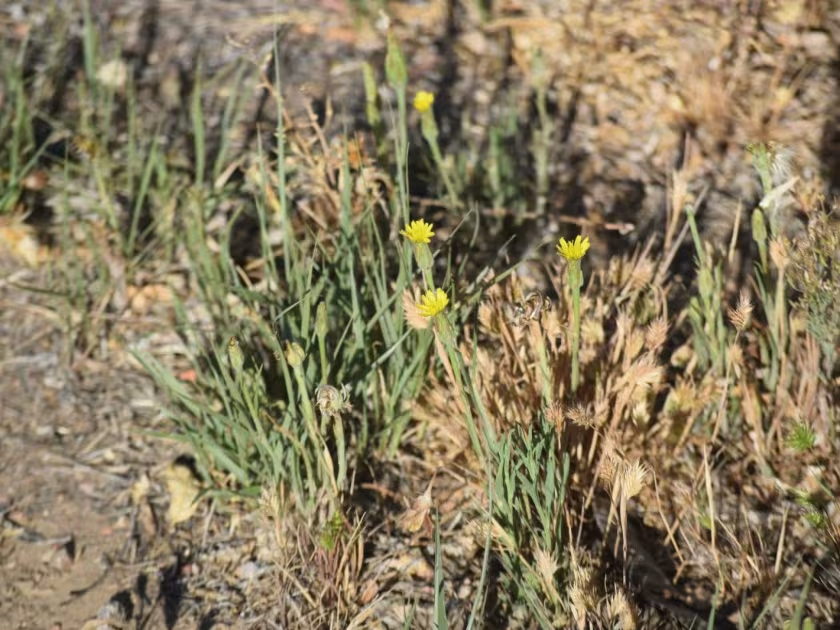
Botanically, it is defined by its deeply divided, lanceolate leaves and bright yellow flower heads that resemble those of the related goat's beard (Tragopogon). The plant typically enters a dormant phase during the most extreme heat.
In agricultural practice, this species is utilized primarily for grazing. Its leaves are highly palatable for livestock, making it a valuable addition to natural pastures in regions where more demanding forage grasses struggle to survive.
Main diseases and pests
The primary pathological threats include fungal infections such as root rot, which occurs predominantly in poorly drained fields. Excess humidity during the active growing season often leads to severe yield losses.
Insect pests, specifically aphids and soil-borne larvae, can damage the crown of the plant and interrupt nutrient translocation. Early detection is essential to prevent significant decline in population density.
Weed competition during the seedling stage is a significant risk factor. As the plant has relatively slow initial growth, mechanical weeding is required until the rosette is fully established to ensure successful stand density.
Overgrazing poses a biological threat, as the plant needs a recovery period to regenerate its biomass. Sustainable management practices must be implemented to prevent soil depletion and promote long-term plant health.
Prevention strategies involve maintaining proper spacing between plants to improve air circulation. This simple technique significantly reduces the risk of leaf spot diseases and ensures a healthier overall crop state.