
King trumpet mushroom
Pleurotus eryngii var. ferulae (Lanzi) Sacc
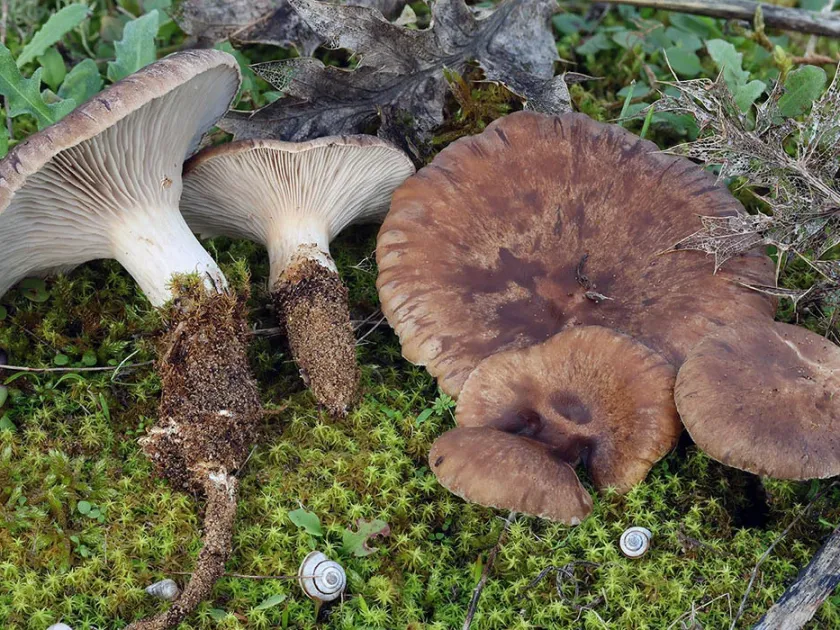
Description
Sowing dates
The King trumpet mushroom, botanically classified as Pleurotus eryngii var. ferulae, is a saprotrophic species that naturally grows in association with the roots of umbelliferous plants.
In a controlled agricultural setting, the cultivation process begins with the inoculation of a prepared sterilized substrate with high-quality grain spawn.
Common substrates include a mix of hardwood sawdust, wheat straw, or sunflower hulls, often supplemented with nitrogen-rich additives to boost fungal development.
The incubation phase takes approximately three to four weeks, during which the mycelium completely colonizes the substrate block in a dark, climate-controlled environment.
Once the mycelium has fully matured, the blocks are transferred to a fruiting chamber, where environmental triggers initiate the formation of the mushroom primordia.
Growing requirements
As a member of the Pleurotaceae family, this species requires precise environmental control to thrive, particularly regarding high relative humidity levels of 85–90%.
Proper air exchange is critical in the fruiting chamber to prevent the accumulation of carbon dioxide, which can lead to malformed stems and small caps.
Lighting should be indirect and consistent, typically around 500–1000 lux, which ensures the development of the mushroom's characteristic shape and texture.
The temperature during the fruiting phase should be maintained between 14 and 18 degrees Celsius, which is significantly lower than the incubation temperature.
Water quality is of paramount importance, as the mushrooms are highly sensitive to contaminants, necessitating the use of filtered or treated water for misting systems.
Yield
The overall yield of King trumpet mushrooms is determined by the nutritional quality of the substrate and the strict adherence to environmental management protocols.
Under optimal conditions, the biological efficiency of this species can reach 20–30% of the substrate mass, making it a viable commercial crop for growers.
The harvest is typically collected in several flushes, with the first flush usually producing the largest, most visually appealing and high-quality specimens.
Growers often experiment with supplementation strategies to improve yields, though careful balance is needed to avoid favoring competing mold growth.
Efficient management of the fruiting cycle ensures that each block remains productive, allowing for consistent output throughout the lifespan of the mushroom bed.
Main diseases and pests
Bacterial blotch is a common issue caused by excess surface moisture and poor air circulation, which can render the mushrooms unsuitable for retail sale.
Trichoderma, or green mold, remains the most significant threat to the mycelium, often arising due to insufficient sterilization of the substrate materials.
Fungal gnats and phorid flies are common pests that damage the mycelial structure and act as vectors for various bacterial and fungal pathogens.
Mite infestations can stunt the growth of fruiting bodies, leading to visible damage on the surface and overall degradation of the crop quality.
Preventative measures are essential and include rigorous facility sanitation, the use of HEPA air filtration, and strict quality control of all incoming raw materials.
Harvesting
Harvesting is performed when the caps are well-formed but before they have fully flattened out, ensuring the best culinary quality and shelf life.
Mushrooms should be cut cleanly at the base to avoid damaging the substrate block, which protects the mycelium and supports future harvest flushes.
Post-harvest handling involves immediate sorting and cooling of the mushrooms to preserve their firmness and extend their viability for commercial distribution.
The dense texture of the King trumpet mushroom makes it highly desirable for transport, as it resists bruising and maintains its integrity better than other varieties.
Spent substrate blocks are removed from the production area once they no longer yield, followed by a thorough cleaning of the chamber before the next cycle begins.