
King oyster mushroom
Pleurotus eryngii (DC.) Quél
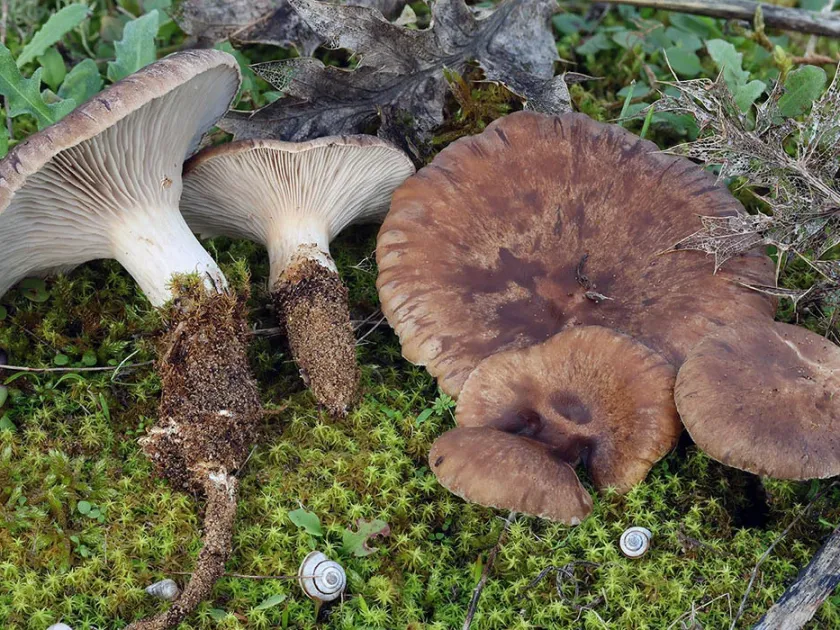
Description
Sowing dates
The king oyster mushroom, or Pleurotus eryngii, belongs to the Pleurotaceae family. Unlike common oyster mushrooms, this species is highly valued for its thick, edible stem and long shelf life, making it a premium agricultural crop.
Inoculation of the substrate occurs after proper pasteurization or sterilization of agricultural waste such as straw, sunflower husks, or hardwood sawdust. These materials must be mixed with nitrogen sources to ensure robust mycelial growth.
The incubation period requires strict sterility to prevent contamination by competing molds. Mycelium colonization typically takes between 25 to 40 days depending on the substrate composition and environmental temperature.
During the colonization phase, the ambient temperature should be kept at 22–24 degrees Celsius in a dark environment. The mycelium must completely permeate the substrate block to establish sufficient energy for the fruiting stage.
Once colonization is complete, the blocks are exposed to a temperature drop to trigger the development of primordia. This is a crucial step that demands precise control over the indoor climate.
Growing requirements
Fruiting of the king oyster mushroom requires a high relative humidity, ideally between 85 and 90 percent. Consistent humidity is necessary to prevent the mushroom caps from drying out during their development.
The temperature during the fruiting phase must be maintained at a cool 14–18 degrees Celsius. Excessive heat causes the mushrooms to lose their characteristic dense texture and leads to abnormal growth patterns.
Effective ventilation is essential to keep carbon dioxide levels below 1000 ppm. High levels of CO2 will result in overly elongated stems and small, underdeveloped caps, which lowers the market value.
Lighting should be provided for 8–12 hours a day, using diffuse light of about 500–1000 lux. Proper lighting ensures that the mushrooms grow with a uniform shape and healthy appearance.
The substrate pH should be balanced between 6.0 and 6.5. Regular monitoring of the substrate moisture is also required to maintain the ideal physiological state of the mycelium throughout the cropping cycle.
Yield
The yield of Pleurotus eryngii depends largely on the efficiency of the substrate formula and the precision of the climate control systems. Yields typically range from 250 to 350 grams of fresh produce per kilogram of substrate.
The first flush is the most abundant and yields the highest quality mushrooms. Subsequent flushes are generally smaller, leading many commercial growers to focus primarily on the first harvest.
Intensive farming methods allow for multiple cropping cycles throughout the year, provided that the substrate blocks are replaced in a timely manner. High-quality spawn is a major factor in maintaining these yields.
The dense flesh of the king oyster mushroom makes it highly desirable for both domestic cooking and culinary export. Its market demand remains consistently high, justifying the investment in specialized climate rooms.
Careful management of each harvest cycle ensures consistent production levels. Growers prioritize sanitation to extend the life of the growing blocks and prevent yield-reducing outbreaks of competitors.
Main diseases and pests
Common pests include sciarid flies and phorid flies, which can damage the mycelium or tunnel into the developing stems. Physical barriers, like fine-mesh screens, are the most effective preventive measure.
Bacterial blotch is a common disease caused by excessive surface moisture. It appears as brown, sunken lesions on the mushroom, significantly reducing its retail quality and shelf life.
Green mold, such as Trichoderma, is a devastating threat to uncolonized or damaged substrate. Strict hygiene protocols and high-quality pasteurization are essential to keep these pathogens at bay.
Viral infections can lead to severe crop failure, resulting in stunted or deformed growth. In such scenarios, deep cleaning and restarting the production cycle are often the only reliable solutions.
- Use only high-quality, lab-certified fungal spawn.
- Install air filtration systems on all air intake vents.
- Keep the growing area clean with approved disinfectants.
- Maintain consistent climate parameters to prevent stress-related diseases.
Harvesting
Harvesting should occur when the stem has reached its optimal size but before the cap has fully opened. Timing is key to ensuring the best texture and the longest shelf life for the final product.
Mushrooms are cut at the base with a sharp blade, taking care not to disrupt the surface of the substrate block. Cleaning the stem of any leftover substrate is part of the professional harvesting process.
Post-harvest, the mushrooms must be cooled down to 2–4 degrees Celsius immediately. This cold chain management keeps the mushrooms crisp and fresh for transport to retailers.
Packaging in perforated containers allows for proper air circulation, preventing moisture buildup. Proper packaging ensures that the king oyster mushrooms arrive at the market in premium condition.
Grading by size and stem thickness allows growers to target different market segments. Uniformity in the harvest is the hallmark of a high-quality, professional mushroom farm.