
Pink oyster mushroom
Pleurotus djamor (Rumph. ex Fr.) Boedijn 1959
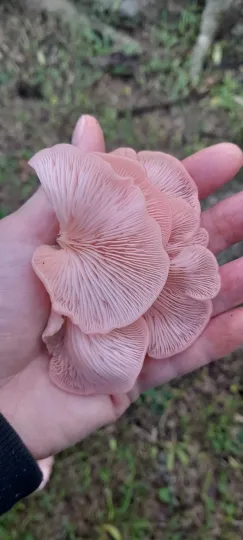
Description
Sowing dates
The Pink oyster mushroom (Pleurotus djamor) is an exotic heat-loving fungus from the Pleurotaceae family. In the wild, it is found in tropical and subtropical regions of Asia, the Americas, and Australia, where it grows on the decaying wood of deciduous trees.
In industrial conditions, the substrate inoculation process begins with the preparation of high-quality mycelium. As an active saprotroph, this species quickly colonizes plant residues such as cereal straw, cotton waste, sunflower hulls, or shredded corn cobs.
An important step before sowing is the sterilization or pasteurization of the substrate, as the Pink oyster is highly competitive but vulnerable to mold fungi during the early stages of incubation. The optimal time for cultivation is not season-dependent if climate-controlled facilities are available.
The incubation temperature for this species should be maintained between 24–28°C. The mycelium colonizes the block significantly faster than the common oyster mushroom, allowing for a shortened production cycle and earlier fruiting.
Using standard grain spawn rates (3–5% of wet substrate weight) ensures uniform mycelial development. It is recommended to maintain strict hygiene during inoculation to prevent contamination of the substrate by competing microflora.
Growing requirements
The Pink oyster mushroom is one of the most thermophilic cultures in mushroom farming. It requires an air temperature between 20°C and 30°C to actively form fruit bodies, making it ideal for summer production or in hot climate zones.
Air humidity in the fruiting chamber must be high, between 85–90%. In conditions of low humidity, the delicate pink caps dry out quickly, deform, and lose their marketability, turning a pale color.
Lighting is a critical factor for this species. Unlike many other mushrooms, Pleurotus djamor requires good ambient light (500–1000 lux) to develop the proper cap shape and vibrant pink color.
Ventilation requirements include regular air exchange to remove excess carbon dioxide. High CO2 concentration leads to elongated stems and underdeveloped caps, negatively affecting yield and visual quality.
The substrate should have a pH between 6.0 and 7.0. High nutrient content in the substrate, such as the addition of nitrogenous supplements, can significantly increase yields but requires strict monitoring of the chamber's sanitary conditions.
Yield
The biological efficiency of the Pink oyster mushroom, under proper technology, can range from 50% to 100% of the dry substrate weight. The final yield depends on the composition of the nutrient medium and precision in temperature control.
The culture is characterized by a very fast development cycle. The first harvest can be collected just 15–20 days after block inoculation, making this species economically profitable for quick turnover in mushroom farms.
Fruiting occurs in "flushes". Growers typically get two to three full harvest cycles, after which the nutrients in the substrate are exhausted. The second flush is often less abundant but produces larger mushrooms.
To increase yield, it is important to avoid sudden temperature drops, as they cause "stress" to the mycelium, which can lead to slow growth or changes in the morphology of the fruit bodies.
On an industrial scale, the average yield from 10 kg of substrate is between 2 and 4 kg of quality mushrooms. Regular harvesting and proper removal of stalk remnants promote more uniform subsequent flushes.
Main diseases and pests
The main biological enemies of the Pink oyster mushroom are mold fungi, such as Trichoderma (green mold). It quickly colonizes non-sterile areas of the substrate, suppressing the growth of the target mycelium.
Among pests, mushroom flies (sciarids) and gnats are the most dangerous, as they carry pathogen spores and damage young primordia. Using fine mesh on ventilation ports helps reduce their presence.
Bacterial infections can affect fruit bodies during excessive condensation on their surface. This manifests as yellowish or brown spots on the caps, making the produce unsuitable for sale.
Mites can parasitize the mycelium, consuming it from the substrate. Prevention involves maintaining high sanitary standards in the facility and regular disinfection of tools and chamber walls.
Proper selection of raw materials and heat treatment (hydrothermal treatment or pasteurization) is the best protection against most diseases, as it "sterilizes" the medium before the spawn is introduced.
Harvesting
The Pink oyster harvest must be timed correctly, while the edges of the caps are still curled downwards. Overripe mushrooms begin to release spores en masse, which reduces product quality and can cause allergic reactions among staff.
Mushrooms are collected in whole clusters by carefully cutting or twisting them at the very base of the substrate block. It is important not to leave pieces of the stalk on the block, as they will quickly begin to rot and attract pests.
After harvesting, the produce requires delicate handling, as Pink oysters are very fragile and prone to mechanical damage. It is recommended to pack them in perforated film or trays to preserve their market appearance.
The shelf life of freshly picked mushrooms is limited due to their high metabolic rate caused by their tropical origin. At 2–4°C, mushrooms maintain their quality for no more than 3–5 days.
Applications include cooking (stir-frying, stewing, soups), as the Pink oyster has a delicate flavor and attractive color. It is also in high demand in the restaurant industry as an aesthetic element for plating dishes.