
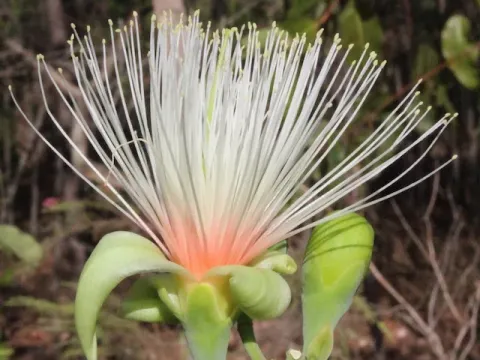
Planchonia
Planchonia
Planchonia is a genus of tropical trees belonging to the Lecythidaceae family. These plants are native to the moist tropical forests of Southeast Asia, ranging from India to the Philippines and Northern Australia.
What the section contains


Planchonia
To thrive, the culture requires consistently high temperatures without significant seasonal fluctuations. The plants prefer well-drained, fertile soils rich in organic matter and maintain constant moisture in the root zone.
Under natural conditions, Planchonia is adapted to high levels of rainfall. It does not tolerate prolonged drying of the substrate, necessitating regular irrigation when cultivated in nurseries or specialized botanical gardens.
Trees of this genus exhibit marked shade tolerance during their juvenile stage, which allows them to develop successfully under the canopy of dense tropical forests. As they mature, their light requirements increase to ensure active flowering and fruit production.
Cultivation techniques involve managing soil acidity, as Planchonia performs best in slightly acidic or neutral soils. Ensuring root aeration is crucial, as waterlogging can lead to root system decay and poor development.
The economic use of Planchonia is primarily centered on the production of high-quality timber. Its wood is valued for its strength and durability, making it a valuable resource for local construction and the manufacturing of various wood-based products.
In some regions, the fruits and bark of certain Planchonia species are utilized in traditional medicine and artisanal crafts. However, commercial cultivation aimed at fruit production remains limited due to the plant's specific climatic requirements.
The yield of woody biomass depends directly on the growing conditions. In optimal tropical forest settings, the trees reach significant sizes, providing a sustainable supply of timber through selective harvesting.
Biologically, these plants are capable of producing fruits containing seeds, which are dispersed by animals in the wild. The potential value of these seeds as a source of oils or technical fats is currently being explored by tropical agricultural researchers.
The potential for commercial cultivation of Planchonia is limited by its relatively slow growth rate compared to fast-growing introduced species. Nevertheless, it serves as a vital component of forest ecosystems, supporting biodiversity and soil conservation.
Key threats to Planchonia include various entomophages and phytopathogenic fungi typical of tropical climates. In high-humidity conditions, trees can become susceptible to stem rots if drainage systems are compromised.
Leaf-eating insects pose a potential danger to young seedlings within forest nurseries. Pest population monitoring is an essential measure for maintaining the health of plantations and natural stands.
Anthropogenic factors remain the primary threat to the survival of many Planchonia species. Deforestation and land-use changes lead to a reduction in natural habitats, necessitating active conservation efforts in botanical gardens.
To control diseases in managed stands, biological control methods aimed at maintaining ecological balance are employed. The use of fungicides in natural forest settings is rarely practiced due to the risk of negative environmental impacts.
Regular sanitary pruning of damaged branches helps reduce the risk of infection spread within the stands. It is important to promptly remove affected plant parts to prevent the contamination of healthy individuals in high-density planting areas.