
Betel
Piper betle L.
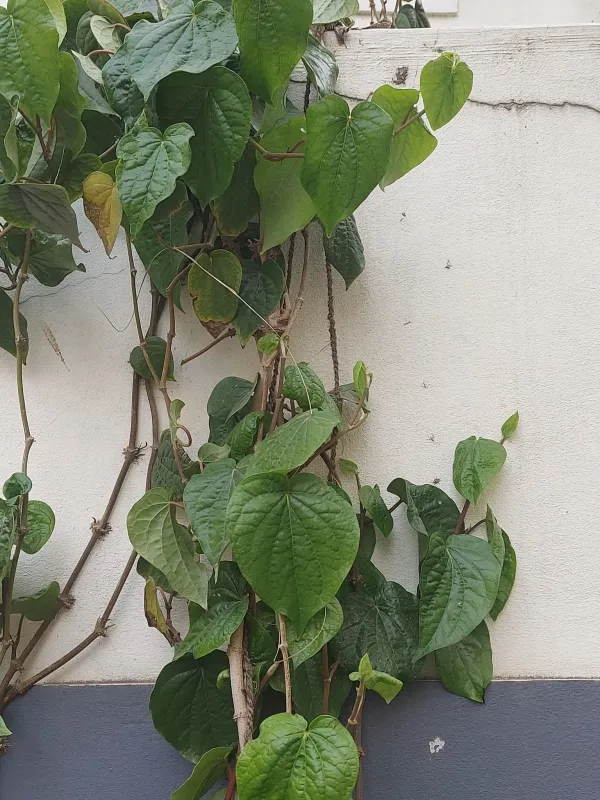
Description
Sowing dates
Betel (Piper betle L.) is a perennial evergreen vine belonging to the Piperaceae family. In commercial cultivation, the crop is primarily propagated vegetatively via cuttings, as seed propagation is characterized by low germination rates.
Strong side shoots or apical cuttings, 25-30 cm in length, are selected for planting. The optimal time for establishing plantations is the start of the monsoon season, which ensures a high survival rate for young plants in the field.
Cuttings are prepared in specialized nurseries where high humidity and moderate shading are maintained. Rooting typically takes 3 to 4 weeks, after which the seedlings are transplanted to their permanent location under support trees.
Planting density varies based on the cultivation method, typically involving rows spaced 1.5 to 2 meters apart. Using support plants (living or artificial) is a mandatory technical requirement for the proper development of the vine.
In the natural conditions of Southeast Asia and India, the crop can grow in one location for 10-15 years, but plantations are usually renewed every 3–5 years to maintain high commercial yields.
Growing requirements
Betel is a tropical plant that requires consistently high temperatures, ranging from 20 to 35 degrees Celsius. The crop is highly sensitive to temperature fluctuations and cannot tolerate even brief frosts, which lead to the death of the above-ground parts.
The most critical requirement for successful cultivation is high relative humidity, which must be at least 70-80 percent. The plant prefers partial shade and suffers from direct exposure to intense sunlight, necessitating the creation of artificial shading.
Soils for betel cultivation must be well-drained, rich in humus, and organic matter. Loamy and sandy loam soils with a neutral to slightly acidic pH level, which are not prone to waterlogging, are considered the most suitable.
Irrigation plays a key role in the crop's management: plants need regular watering, especially during dry periods. However, water stagnation in the root zone is unacceptable as it triggers the development of root rot and fungal infections.
Regular application of organic fertilizers, such as well-rotted manure or compost, is recommended to maintain soil fertility. Mulching the beds helps retain moisture and suppress weed growth, which positively impacts the quality of the leaf yield.
Main diseases and pests
Betel is susceptible to fungal diseases, among which leaf spot and anthracnose are the most dangerous. Pathogens are often activated by excessive humidity and poor plantation ventilation, leading to a loss of commercial leaf quality.
Root rot, caused by Phytophthora pathogens, poses a serious threat to young plantings. If the root system is infected, the plant wilts and dies quickly, so prevention includes the use of fungicides and proper drainage management.
Pests that cause the most damage include aphids, spider mites, and mealybugs. They feed on the sap of the leaves, causing leaf deformation, yellowing, and a decrease in the photosynthetic productivity of the entire vine.
Nematodes residing in the soil can also damage betel roots, making the plant weak and vulnerable to other infections. To control them, crop rotation and the use of organic nematicides, including neem cake, are employed.
Comprehensive crop protection is based on adhering to sanitary standards: removing infected plant parts, ensuring sufficient aeration between rows, and timely treatment with biological control agents.
Harvesting
Harvesting betel is a labor-intensive process that begins 6–9 months after the cuttings are planted. For commercial purposes, only mature, well-formed leaves that possess their characteristic aroma and texture are collected.
Harvesting is done by hand, which allows for the selection of products of the required quality without damaging the main stem of the plant. During the first year, harvesting is carried out carefully, gradually increasing intensity as the vine matures.
Once active fruiting begins, the crop can be harvested every 15–30 days, depending on the growth rate of young leaves and weather conditions. A quality leaf should be intact, deep green, and free of physical damage.
The harvested crop requires immediate sorting by size and quality, after which the leaves are packed in moist cloth or special containers. This is necessary to prevent rapid drying and the loss of essential oils.
The economic use of betel is concentrated in the food and pharmaceutical industries. In Asia, the leaves are often consumed as a component of chewing mixtures and are also used in traditional medicine due to their antiseptic properties.