
Piper aduncum
Piper aduncum L.
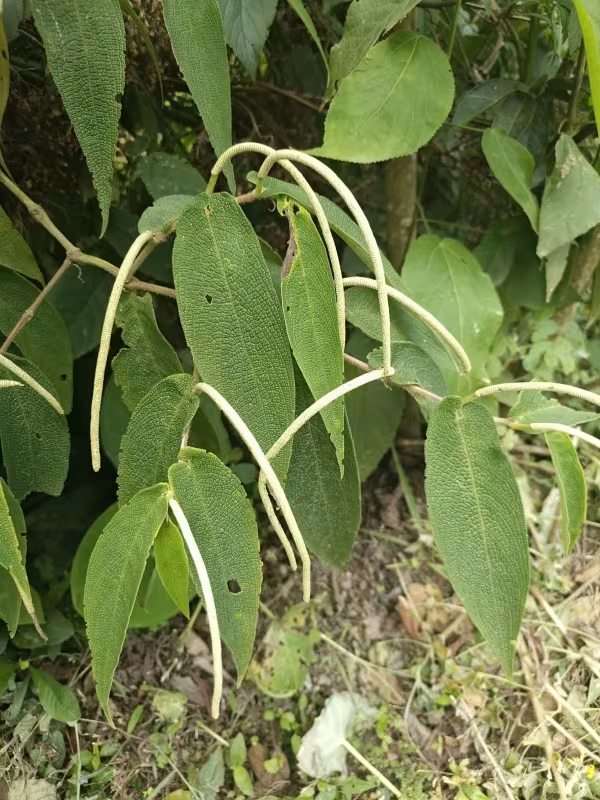
Description
Sowing dates
Piper aduncum, commonly known as spiked pepper, is a fast-growing, perennial evergreen shrub belonging to the Piperaceae family. It is widely distributed across tropical regions due to its effective seed dispersal mechanisms.
In a controlled agricultural environment, seeds are sown in moist, nutrient-rich soil immediately after harvest, as they possess short-term viability and should not be stored for extended periods.
Germination requires a consistent temperature between 25 and 28 degrees Celsius, along with high atmospheric humidity to mimic natural tropical conditions.
Due to the plant's aggressive growth habit, spacing between rows should be at least two meters to allow for optimal expansion and ease of management during growth phases.
In professional nursery settings, seedlings are raised in containers before being transplanted into their permanent outdoor site once they have established a robust root system.
Growing requirements
This species thrives in open, sunny environments. While it demonstrates some shade tolerance during the early seedling stage, adult plants require significant light exposure for maximum productivity.
Piper aduncum demands consistent moisture throughout the year. It does not tolerate prolonged drought, making it best suited for climates with regular, heavy rainfall patterns.
The ideal soil for this crop is fertile, well-drained loam with a near-neutral pH. Poor drainage is detrimental, as the root system is highly susceptible to fungal rot in waterlogged conditions.
In non-tropical regions, this plant must be grown in specialized greenhouse facilities where climate control systems maintain appropriate temperature and humidity levels.
Regular fertilization with nitrogen-based nutrients significantly promotes vegetative growth, which is critical for maximizing the leaf biomass required for essential oil extraction.
Yield
The primary agricultural output of Piper aduncum is its biomass, consisting of leaves and inflorescences, which serve as the raw material for extracting oils rich in dillapiole.
Yield is directly proportional to the density of the canopy and the management of the crop's nutritional needs; intensive cultivation allows for multiple harvest cycles annually.
Plants in the stage of active fruit development typically exhibit the highest concentrations of secondary metabolites, making this the prime time for harvesting.
The extraction efficiency of the oil is dependent on the freshness of the harvested material and the specific extraction methods employed post-harvest.
Maximum productivity levels are usually reached when the plant is between two and three years of age, assuming stable environmental conditions are maintained.
Main diseases and pests
Piper aduncum is known for its natural resistance to many pests due to its complex phytochemical profile, which includes various terpenes that act as natural repellents.
However, in stagnant greenhouse environments, the plant may become susceptible to powdery mildew, which can significantly damage the foliage if not managed with proper airflow.
Typical insect pests include aphids and specific leaf-eating caterpillars, which can damage the tender new growth if they are allowed to establish a population.
Root rot remains the most significant threat to the crop, primarily resulting from over-irrigation or planting in compacted, poorly draining soil types.
The use of biological control agents is highly recommended for integrated pest management to preserve the purity and quality of the extracted essential oils.
Harvesting
Harvesting involves the careful manual or mechanical trimming of young branches, leaves, and spikes, which contain the highest density of glandular structures holding the essential oil.
The best time for harvesting is early morning, as this minimizes the loss of volatile oil components caused by the heat of the sun throughout the day.
Post-harvest processing must be prompt; harvested material should be transported to the extraction site or drying facility immediately to prevent fermentation.
Drying should be performed in a well-ventilated, shaded area to protect the oils from degradation and ensure the final product retains its chemical integrity.
Routine harvesting also serves as a pruning mechanism, helping to maintain the plant in a manageable size while stimulating the growth of new, oil-rich shoots.