
Pineapple
Ananas comosus (L.) Merr.
Description
Growing requirements
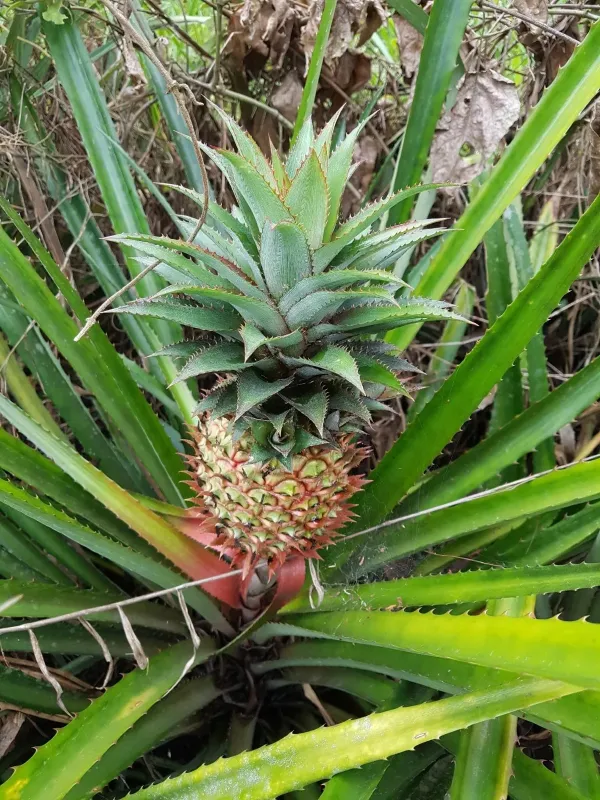
Pineapple, scientifically known as Ananas comosus, is a perennial herbaceous plant belonging to the Bromeliaceae family. It is characterized by its sword-like leaves and a single composite fruit that develops at the center of the rosette.
Native to the tropical regions of South America, this crop is now grown extensively in tropical and subtropical climates worldwide. Major producers include Costa Rica, the Philippines, Thailand, and Brazil.
The plant requires warm conditions for optimal growth, typically ranging between 22 and 30 degrees Celsius. Exposure to temperatures consistently below 15 degrees Celsius can cause severe physiological stress and growth arrest.
Soil requirements for pineapple cultivation involve well-drained, porous soils with a pH level between 4.5 and 6.0. The crop is highly sensitive to waterlogging, which promotes fungal root diseases.
Consistent light exposure is critical for the development of high-quality fruit. In regions with frequent cloud cover, growth rates and fruit sugar content may be significantly impacted, requiring careful site selection.
Yield
Industrial pineapple production achieves high yields through intensive management practices and high-density planting techniques, often exceeding 50,000 plants per hectare.
Average commercial yields range from 60 to 90 metric tons per hectare. Productivity is heavily influenced by cultivar choice, soil fertility management, and water availability during critical growth stages.
Economically, pineapples are utilized for fresh consumption, canning, and juice production. The fruit is also an important industrial source of bromelain, a proteolytic enzyme used in medicine and food processing.
Vegetative propagation is the standard industry practice, utilizing suckers or crowns to ensure genetic uniformity across the plantation, which facilitates synchronized harvesting.
Modern agrotechnology focuses on optimizing flowering through hormonal induction, allowing growers to control production cycles to meet market demand throughout the year.
Main diseases and pests
Heart rot, caused by Phytophthora species, is a prevalent disease in pineapple crops, particularly in poorly drained soils. It causes systemic decay that can result in total plantation loss if unchecked.
Root-knot nematodes pose a significant threat to production by damaging the root system, which severely hinders nutrient uptake and water absorption, leading to stunted plant development.
Mealybugs are primary pests that damage leaves by extracting sap. More importantly, they are vectors for mealybug wilt-associated viruses, which can devastate entire fields.
Integrated pest management strategies are essential, involving the use of clean planting stock, systematic monitoring, and the targeted application of insecticides and fungicides.
- Strict adherence to quarantine for planting materials.
- Implementation of drainage systems to prevent root rot.
- Routine application of biological or chemical controls against vectors.