
Piliostigma rufescens
Piliostigma rufescens
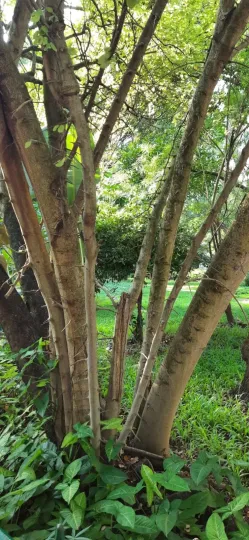
Description
Sowing dates
The propagation of Piliostigma rufescens is primarily achieved through seeds, which possess a hard, impermeable seed coat requiring pre-treatment for optimal germination.
Mechanical scarification or immersion in warm water for several hours is essential to break the dormancy and ensure uniform seedling emergence in nursery beds.
Seeds are typically sown at the beginning of the rainy season into well-drained nursery containers or directly into prepared soil pits to maximize root establishment.
Young seedlings require moderate shade during the initial weeks of growth to prevent scorching from intense tropical sunlight before they are hardened off.
Transplanting to the permanent field site should coincide with reliable rainfall, ensuring the young trees have sufficient soil moisture to survive their first season.
Growing requirements
Piliostigma rufescens belongs to the Fabaceae family and is highly adapted to the semi-arid climates of Sub-Saharan Africa and other tropical regions.
The species demonstrates remarkable tolerance to low-fertility soils, including sandy and rocky substrates, and can thrive in areas with pronounced seasonal water stress.
Full exposure to sunlight is required for healthy growth; while it can tolerate light competition, excessive shading significantly reduces biomass production.
As a nitrogen-fixing species, it plays a vital role in soil enrichment, making it an excellent candidate for intercropping and sustainable agroforestry systems.
The plant is highly resilient to high temperatures, effectively managing transpiration rates to survive in regions where mean annual temperatures exceed 30 degrees Celsius.
Yield
The main agricultural utility of Piliostigma rufescens lies in its capacity to provide high-quality fodder for livestock during the dry season when other grasses are scarce.
Management practices such as periodic pollarding and coppicing are used to stimulate the growth of new leafy branches, maximizing the available green biomass yield.
The tree produces significant quantities of pods and seeds, which are utilized as nutritional supplements for small ruminants in local farming communities.
In addition to feed, the wood serves as a sustainable source of fuel and raw material for small-scale carpentry, supporting local economic diversification.
The flowering period provides a substantial nectar source, making this species an essential component for apiaries located near agroforestry plots.
Main diseases and pests
While naturally robust, the species can be susceptible to termite infestation, particularly in young saplings or weakened trees located in stressed environments.
Fungal leaf spots may occur in areas with poor ventilation or high relative humidity, potentially leading to premature senescence of the foliage.
Insects, particularly various species of larvae, can cause defoliation, which although usually non-lethal, reduces the overall forage potential of the plant.
Integrated pest management, including monitoring and the maintenance of vigorous plant health, is the preferred strategy over chemical interventions.
Preventative care, such as clearing debris from around the base and ensuring proper spacing, reduces the risk of pest outbreaks and disease transmission.
Harvesting
Harvesting of leaves for fodder is carried out throughout the growing season through selective pruning of the canopy, allowing the tree to recover quickly.
The mature pods are collected once they have turned brown and dried on the tree, typically towards the end of the dry season before they naturally dehisce.
Wood harvesting is managed through selective thinning, ensuring that younger, productive individuals are protected to maintain continuous biomass supply.
Post-harvest handling of pods involves drying them under the sun to reduce moisture content, which prevents mold growth during long-term storage for feed.
Efficient harvesting techniques must prioritize the long-term survival of the trees, as they are often integral to the landscape's ecological stability.