
Phyla stoechadifolia
Phyla stoechadifolia
Description
Growing requirements
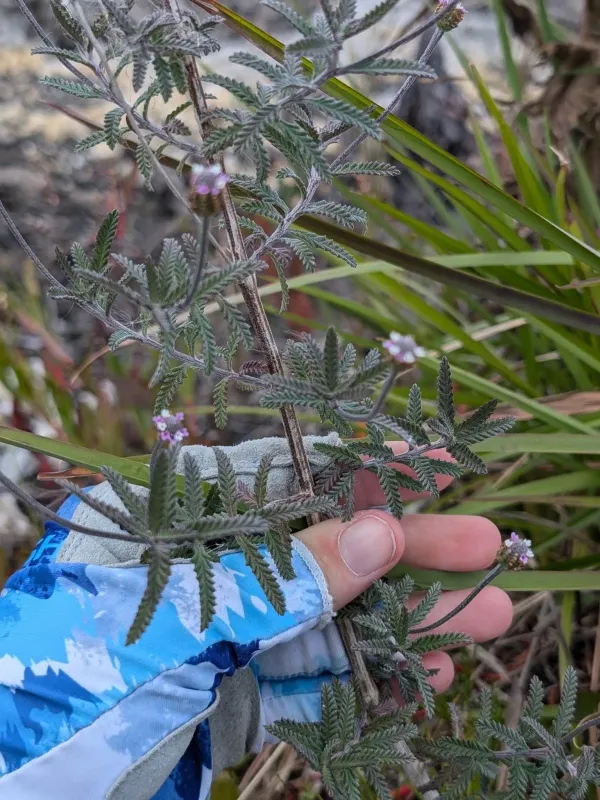
Phyla stoechadifolia is a perennial herbaceous plant belonging to the Verbenaceae family. It is native to the tropical regions of Central and South America, where it thrives in moist, sun-exposed habitats, often colonizing disturbed soils and riverbanks.
The morphology of the plant is defined by its prostrate, creeping stems that root easily at the nodes. Its leaves are distinctively elongated with serrated margins, which helps in identifying the species. The plant forms dense mats that can effectively cover soil surfaces, preventing erosion.
Regarding climate, this species is highly thermophilic and lacks frost tolerance. It performs best in humid tropical environments with stable temperatures. Any exposure to temperatures near or below freezing will severely damage the plant's metabolic processes and structural integrity.
In terms of soil requirements, Phyla stoechadifolia prefers fertile, well-draining loamy or sandy soils. Consistent moisture is a critical factor for successful growth; hence, irrigation is essential in agricultural settings to maintain vigorous development and prevent leaf wilting.
The primary economic use of Phyla stoechadifolia lies in its ethnomedicinal applications. Extracts from the aerial parts of the plant are utilized for their anti-inflammatory, expectorant, and febrifuge properties. It is considered a valuable resource for local herbal medicine markets and represents potential for further pharmacological research.