
Persicaria tinctoria
Persicaria tinctoria (Aiton) Spach
Description
Sowing dates
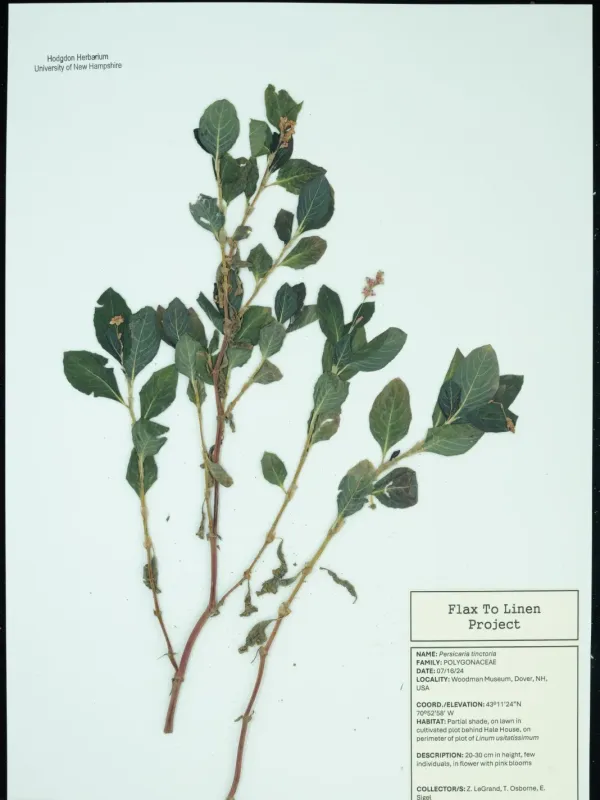
Persicaria tinctoria, commonly known as Japanese indigo, is an annual herb belonging to the Polygonaceae family. It is a warm-season crop that thrives in regions with a long, frost-free growing period.
Seeds should be sown indoors or in a greenhouse about 4–6 weeks before the last expected frost. Given the small size of the seeds, they require a fine, well-prepared seedbed with consistent moisture for successful germination.
Direct sowing in the field is possible once the soil temperature consistently reaches 15–18°C. Spacing between rows should be maintained at 40–50 cm to ensure adequate airflow and sunlight penetration for all plants.
Germination typically occurs within 10–14 days under optimal conditions. It is essential to keep the soil surface moist but not waterlogged during the early stages to encourage root development.
In colder climates, using black plastic mulch can help warm the soil faster and suppress weed growth, which is critical for the slow-starting seedlings to establish themselves effectively.
Growing requirements
The plant requires rich, moist, and well-draining soil with a pH ranging between 6.0 and 7.0. Soils with high organic content significantly improve the plant's ability to synthesize indigo pigments.
Ample water supply is a key requirement for Persicaria tinctoria. As a hydrophilic plant, it demands consistent irrigation, particularly during the hot mid-summer months to prevent wilting and stress.
Full sun exposure is crucial for the development of high-quality dye precursors in the leaves. Shaded areas will result in spindly growth and a lower yield of the desired indigo pigment.
Nitrogen-rich fertilizers are essential throughout the vegetative growth phase. Applying compost or organic nitrogen sources ensures the production of lush foliage, which is the primary source of the harvest.
Protection from strong winds is highly recommended, as the stems of the plant can be brittle. In open fields, planting windbreaks or protective borders helps maintain the integrity of the crop canopy.
Main diseases and pests
Leaf-eating insects, such as caterpillars and various beetle species, pose a significant risk to the foliage. Regular scouting and biological pest control are the best strategies to mitigate these threats.
Powdery mildew is a common fungal issue that arises in high-humidity environments. Improving aeration by correct spacing and avoiding overhead irrigation can effectively reduce the incidence of the disease.
Root rot occurs in compacted or waterlogged soils. Ensuring good soil structure and proper drainage is the most effective way to prevent this silent killer from devastating the crop.
Aphids can colonize the growing tips of the plants, causing distorted growth. Regular inspection and the use of neem oil or insecticidal soap are recommended if an infestation is detected.
Weed management is vital, especially when the plants are young. Since Persicaria tinctoria competes poorly with aggressive weeds, mechanical weeding is necessary to protect the plant's nutrient access.
Harvesting
Harvesting is usually carried out in late summer, just before the onset of flowering. During this stage, the concentration of the precursor indican in the leaves reaches its annual peak.
Plants are cut back to approximately 10–15 cm from the base. This method allows the plant to produce a second flush of leaves, which can be harvested later in the autumn season.
Immediate processing is vital after the harvest. The leaves should be either fermented or dried under controlled, shaded conditions to preserve the chemical compounds required for natural dyeing.
For seed production, a portion of the crop should be left untouched. These plants will continue to grow until the first frost, allowing the seeds to mature fully for collection and cleaning.
Post-harvest handling requires clean tools to prevent contamination. The harvested biomass should be kept out of direct sunlight and high heat to prevent premature oxidation of the pigment.