
Pink knotweed
Persicaria capitata (Buch.-Ham. ex D. Don) H. Gross
Description
Sowing dates
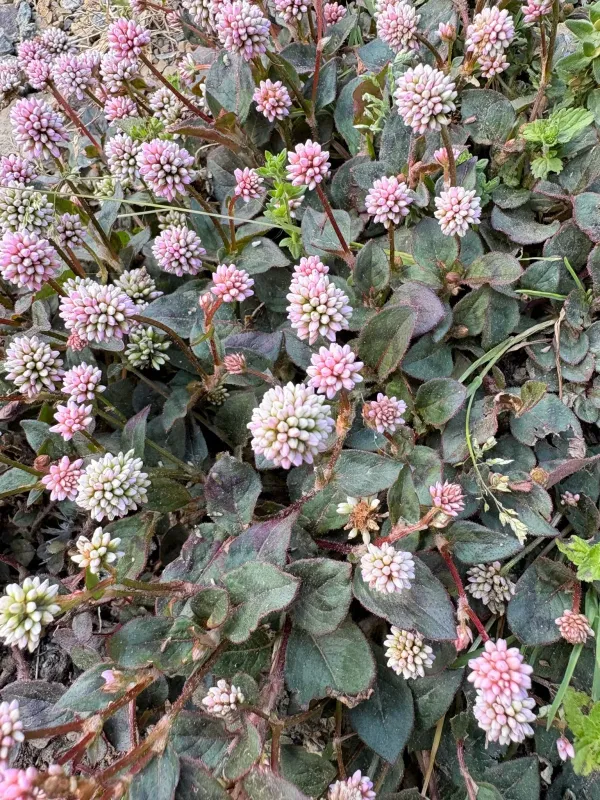
Pink knotweed (Persicaria capitata) is a member of the Polygonaceae family. It is a perennial trailing plant that produces small, spherical flower heads resembling clover.
Propagation is typically done via seeds or cuttings. Sowing seeds in spring, ideally indoors in a greenhouse, ensures a robust start for the growing season.
The seeds should be sown on the surface of the growing medium, as they require light to germinate. Keeping the soil consistently moist is crucial during the first two weeks.
Once the risk of frost has passed, the seedlings should be hardened off and planted outdoors. The plant spreads quickly, making it an excellent choice for ground coverage.
Vegetative propagation via cuttings is highly efficient; pieces of stems with nodes placed in moist soil or water develop roots rapidly.
Growing requirements
The plant thrives in full sun, which enhances its foliage color, although it can tolerate partial shade. Bright light is key to maintaining the vivid pinkish-red hues.
Regarding soil, Persicaria capitata prefers well-draining, moderately fertile soil. It adapts well to various soil types, provided they do not hold excessive moisture.
While known for its durability, it requires consistent watering to look its best, especially during hot summer days when evaporation rates are high.
In colder regions, it is often grown as an annual or overwintered in protected containers. It is highly valued for landscaping rock gardens and retaining walls.
Regular fertilization is not strictly necessary but can encourage more lush growth and continuous flowering throughout the warm season.
Main diseases and pests
Pink knotweed is generally resistant to pests and diseases. However, root rot can occur if the plant is kept in waterlogged, poorly drained soil.
Aphids can occasionally infest the plant, especially in crowded, stagnant air conditions. Monitoring the leaf undersides is recommended for early detection.
Maintaining a balanced moisture level and ensuring good air circulation are the best preventative measures against most horticultural issues.
Pruning is highly beneficial for this species. It keeps the trailing mats dense, prevents leggy growth, and promotes the development of new flowers.
If the plant shows signs of distress, checking for excess moisture in the root zone is the first step in successful diagnosis and recovery.